
Get your offer accepted without the highest bid. Can't raise the competition with a higher offer? Use storytelling to win the seller over. Read it here.

Get your offer accepted without the highest bid. Can't raise the competition with a higher offer? Use storytelling to win the seller over. Read it here.

If you want to buy a home this year, here are five tips on how to buy a house in 2019. At Benchmark, we make the effort to make it easy to claim your piece of the American Dream.
Watch this video, then read last week’s article linked below.
This New Year, Reach Your Dream of Homeownership
To be able to know if you can realistically afford to be a homeowner, you should first explore your local housing market to find out how much you should expect your new home to cost.
You can use the “How Much House Can I Afford?” tool to get a realistic estimate. We also have a variety of Calculators right here at Benchmark.us to help calculate a number of factors, comparisons, and scenarios.
To get an idea whether the house you have your eye on is priced fairly, you should also ask your real estate agent for a Comparative Market Analysis. (see also: Find A Great Real Estate Agent The Easy Way)
When you have an idea of the cost of your future house, you can roughly calculate how much you will need for your down payment. Think you need 20% down?
Think again. See last week’s post, “This New Year, Reach Your Dream of Homeownership” if you haven’t already.
Saving can be challenging, especially if you are not used to tracking your expenses. To improve your chances of saving success, you should know where every dollar that you earn is going every month. Check with your bank or credit union, as many banks and credit unions include tools for this. You can also use third party tools like Mint, YNAB, everydollar or even a simple spreadsheet. The more organized your plan towards achieving the goal, the more successfully you will be able to save.
If you read our previous post This New Year, Reach Your Dream of Homeownership, you will recognize the link between consistent savings and your down payment. A budget can help you do that.
If it will take you several months or years to save for your down payment, you could even consider opening a high yield savings account to get your savings earning as well.
For many, the first home you buy is not the first home you want. If the home you want is beyond your financial reach, it could still make sense to settle on a less expensive buy, if your budget and standards allow.
It could cost you far more money in the long run to wait until you can afford the house you want, when a house you could be happy with is within reach now. You can always “trade up” when the time is right. You will have to make this decision for yourself, but it is something to think about.
In an earlier article entitled Millionaire Tells Millennials To Buy A Home, we mention that David Bach, author of “The Automatic Millionaire” is quoted as saying,
“The fact is, you aren’t really in the game of building wealth until you own some real estate.”
Mr. Bach also said,
“Oftentimes, buying your first home means you’re not buying your dream home. You’re just getting into the market.”
If that isn’t enough, you can read “Homeowner Average Net Worth 3,600% Higher Than Renter” for more reasons to consider getting started sooner rather than later.
I have a convenient interactive tool right here on my website to help walk you through the steps to take when buying a home.
We built a tool for our Loan Officer websites that asks a series of questions to give you an personalized step-by-step plan for buying your next home. Need a plan for refinancing? It does that too.
To use this tool for yourself, you will need to find a loan officer in your area Find Your Loan Officer, then click on “The Way Home” in the navigation menu.
To use this tool, you will need to find your Loan Officer and go to their website by clicking the link that looks like this:

Once on your loan officer’s website, look for the “The Way Home” navigation link (below), and click.
Do you feel overwhelmed by what appears to be a monumental achievement? We understand. Do you wish it could seem easy? This is what we do every day.
At Benchmark, we have such a great team, that we have been able to make mortgages happen for borrowers who had already been turned down by another lender.
Not sure where to start? No problem. We are honored to help guide to towards your dream of owning your own home with a mortgage that aligns with your personal financial outlook.
Even if you are concerned with debt, your credit history, or even your down payment, let’s chat! If you want to make your dreams a reality, we are here to help make that possible.
Find your branch, and contact them today. If you are ready, you can click to Apply Now. We look forward to helping you reach your goals!Call or email us, or Contact Us today. If you are ready, you can Apply Now. We look forward to helping you reach your goals!Call me, Email Me, or Contact Me today. If you are ready, you can Apply Now. I look forward to helping you reach your goals!

The Federal Housing Finance Agency has announced that the maximum conforming loan limits for mortgages has increased.
In most of the country, the confirming loan limits will increase nearly 6.5%, from $453,100 to $484,350 for 2019. For most high-cost areas, where 115% of the local median home value exceeds the loan limit, the loan limit for one unit properties will be $726,525.
You can now purchase a home with a higher sales price using a conventional conforming loan through the FHFA regulated Fannie Mae or Freddie Mac.
The new limits are effective January 1st, 2019. Typically, the VA and Federal Housing Administration (FHA) are expected to adopt the same increased loan limits for 2019 for FHA and VA loans.

Housing inventory dropped 8.5% over the last year as of 2Q 2017, the 9th quarter in a row of this decrease in the number of available homes. Buyers are buying homes the fastest time on record since tracking began in 2012. When supply is down by 20% compared to five years ago, it is normal to expect demand to respond in normal economic fashion. Today, only 47% of homes stay on the market longer than 2 months.
Of course, the decrease in supply has lead to the expected economic consequence of raising prices. Homes are becoming less affordable, especially for first time homebuyers. While there is not much you can do to influence the economics of the market, below are three steps you can take to be able to play the game successfully.
Before you begin to search, talk to your mortgage consultant and a Realtor. In a highly competitive market, it’s important to be prepared. Homebuyers who begin their home hunt with a pre-approval in hand are able to act fast, resulting in an accelerated time table. The most prepared buyer’s readiness is often more attractive to sellers, putting the proactive buyers at an advantage.
Whether you’re a first time homebuyer or a homeowner looking to sell your house, creating a timeline model is a great way to plan your success. With clear expectations and a calendar, your lender and Realtor can help make your journey as smooth as possible.
Your Realtor and your mortgage lender are on your team, and ready to help you find the best home and financing plan that takes your needs and desires into account. While buying a home can seem like a daunting task, we know that it doesn’t have to be. It’s all part of what we call The Benchmark Way.
* Data and information sourced from Trulia https://www.trulia.com/blog/trends/inventory-q2-2017/ accessed on July 21, 2017

With Benchmark, you’re never alone. We know that getting a mortgage can be scary, but it doesn’t have to be that way. Our family is here to walk you through the process of getting you home. In next part, we will give a deeper view into the heart of our approach to long term care of our clients.
From applying for a mortgage through closing on your new home, Benchmark has your back. Welcome to,
Before you get started with a mortgage, you’ll want to find your loan officergive me a call or contact mechoose your loan officer or contact us today. Your Benchmark lender is a licensed mortgage professional who understands exactly what it takes to match you with the best possible loan to match your goals. It’s important to note, no loan will ever be the same.

Getting pre-approved is the first major step towards purchasing your new home. To get pre-approved, we verify your information and documents to determine how much you are able to borrow towards your new home. This will strengthen any offer you decide to make on a home.
Having a good real estate agent can greatly enhance your home-buying experience. They can help match you to the home you may not have even known you wanted, and are your best advocate in negotiating your offer. Through our relationships, your Benchmark lender may be able to make a great referral for you.
For some tips on choosing one one your own, we have a great article for you: Find A Great Real Estate Agent The Easy Way.
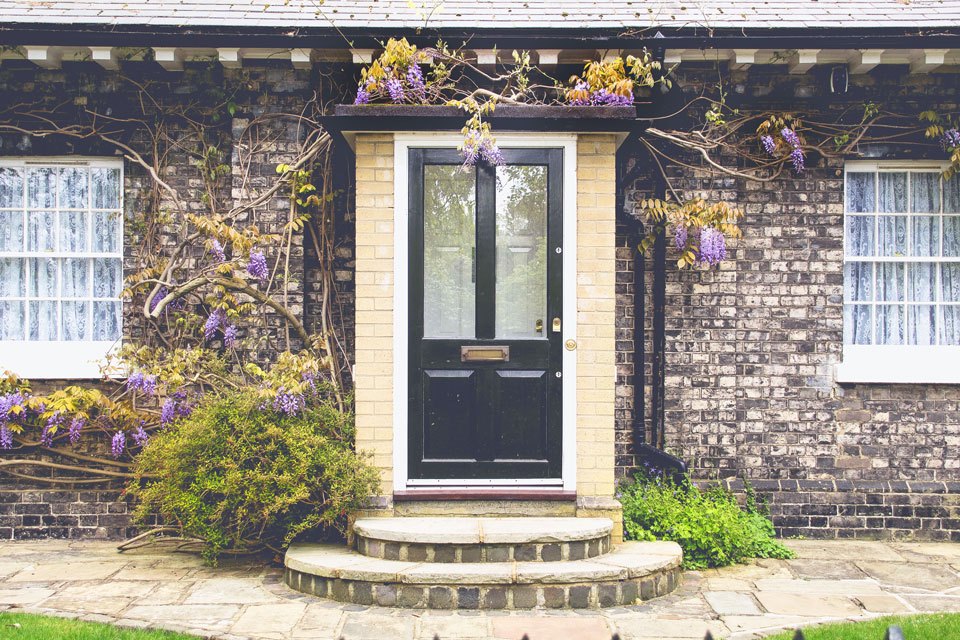
Knowing your price range and desired location(s) will help your real estate agent with your search. Once you have your home in sight, move FAST. Contact your agent, and let your Benchmark lender know about your find!

Whether the Contract is completed by your realtor or by yourself, its completion will get you one step closer to your new home. As soon as the offer is accepted and the contract is signed by all parties, please communicate your new home’s address to your lender. Then we will be able to start assembling your Loan Estimate.
Your Benchmark lender will send you a loan estimate. The loan estimate will give you a general overview of your loan and estimated costs.

This is where The Benchmark Way of lending wins the race. Our team of underwriters and processors will be working hard to make sure we have what we need from you to close your loan on time. So, sit back and relax… We are ordering your appraisal, getting documents from Title, and everything in between to complete your loan.
This is our favorite part of theprocess! Our underwriters have looked over all of the documents and have given their seal of approval. At this point, you’re almost home!
The closing date will be set*, and the documents** will be ready to be signed. Get your pen ready, because we will need for you to sign on lots of lines! After everything is signed, the keys are yours. Welcome Home!
*Clear to Close: This simply means that all conditions of your loan have been met, and the loan underwriter has given the blessing to release instructions to your title company for the closing. If you are buying a home this is your goal.
**Closing Disclosure: All lenders are required to provide your Closing Disclosure three business days before your scheduled closing. Use these days wisely! Double-check that all of the details are correct. If something looks different from what you expected, ask me why, and let’s get it sorted ASAP. NOW is the time to resolve problems. If the explanation you get isn’t enough, just keep asking questions.

Looking to buy or sell your home? You may have noticed the vast amount of information available in the news and on the internet about real estate. When trying to make sense of it all, one can easily get overwhelmed or confused.
You need an agent who can help navigate the current housing market. If you are looking to sell, you need an agent who can help you price your home correctly and appropriately. If you are looking to buy, you need an agent who can help you determine what to offer on your dream home (without overpaying or offending the seller with a below-market offer).
How high should you price your home? How much should you offer on a listing? A great agent can help you determine these numbers, and help you come out on top.
Financial guru Dave Ramsey says,
We admit, this seems rather obvious. But, how do you know whether an agent is really up-to-the-minute on what is happening in your real estate market? How do you know if they will take the time to simply and effectively explain what it all means and how it may affect you?
A simple way to find out is by searching through a real estate agent’s social media channels. What kind of material are they sharing? Are they using their social media platforms to share current, helpful information or are they just posting trendy recipes and inspirational quotes?
The best agents spend time educating and informing so you can be confident when buying or selling your home. What they share online will help you to determine whether an agent meets the description advised by Dave Ramsey above:
“…you should always look for someone with the heart of a teacher.”
Do you know a great agent like this? What other tips do you have for us? Share this article with your additions.
Barry Habib with Mortgage Market Guide was a guest on the CNBC show Squawk Box yesterday and shared some great insight on why now is the “perfect storm” for homebuyers.
He points to three big reasons all renters should jump into homeownership:
1. Rent rates are increasing in some markets. It is becoming increasingly more affordable to own a home versus renting a similar home.
2. Interest rates have basically bottomed out. Could rates go lower? Yes they could with the announcement of QE3. But money is so cheap to buy a home that it makes sense to buy right now.
3. Tax benefits. On top of the really cheap mortgage money available today you also have several tax benefits of homeownership. The IRS Publication 530 details what can and cannot be deducted.
Watch the video below and leave a comment on your thoughts about the current housing market:
Before you begin the process of looking for a new home, as a potential home buyer, you will want to carefully inspect your financial situation. Home buyers should be certain their current income and monthly expenses can support a healthy mortgage payment. There are several ways would-be home buyers can maximize the income they have and make certain they can afford a mortgage.
By following these few simple money saving tips, those wanting to purchase a home can make that dream a reality.
Tips for Saving Money:
1. Create a Budget – By determining your fixed and discretionary expenses, families can focus where they have some flexibility in their budget. Keeping a log of expenses will also help families understand how their money is spent each month and can assist them in making necessary changes.
2. Write Down Goals – When goals are written down they tend to become more real. Once goals are in writing, families are more likely to work towards those written goals. Keeping these goals in a plain view will provide the family with a constant reminder as to the purpose of their sacrifices. Consider hanging your goals on the refrigerator.
3. Eat at Home – One of the easiest ways to save money is to eat at home. Eat breakfast at home, and take a sack lunch to work. Preparing dinner at home will not only save money but provide the opportunity for family time as well. Are you currently eating out or cooking at home?
4. Make a Grocery List – Before going to the grocery store, families should have a list of ingredients they need for the week’s meals. This will curb impulse shopping and prevent unnecessary purchases which simply go to waste. Eating something before you go grocery shopping will prevent the “hunger buys” also.
5. Build in Treats – Living on a budget should not mean never eating out, getting a coffee, or going to a movie. Depriving the family of these special treats will make it impossible to stick to a budget. While going out to a movie every weekend or buying a coffee every morning may not be the best money saving ideas, building in opportunities for these occasional treats is crucial.
Mortgage lenders recommend that families seeking to buy a home first consider their financial situation and how this may affect their ability to obtain a mortgage.
We can work with you to create a plan of homeownership that is best for your long term goals. By adopting the above money saving tips, families can ensure their financial priorities are in order.
WASHINGTON (AP) — Five years after the U.S. housing bust sent sales and prices plunging, the spring home-buying season is pointing to a long-awaited recovery.
Reduced prices, record-low mortgage rates, higher rents and an improving job market appear to be emboldening many would-be buyers. Open houses are drawing crowds. A wave of foreclosures is leading investors to grab bargain-priced homes.
And many people seem to have concluded that prices won’t drop much further. In some areas, prices have begun to tick up.
Interviews with more than two dozen potential buyers, sellers, brokers, Realtors and economists suggest that confidence is up and that sales will move slowly but steadily higher.
“The biggest challenge that we’ve had over the past four years is fear — fear that the economy is collapsing, that property values are collapsing, that the world is coming to an end,” says Mark Prather, a broker at ERA Buy America Real Estate in La Palma, Calif. “The fear factor is all but gone.”
Prather says the number of prospective buyers who contacted his company last month was about 35 percent more than a year ago.
The spring buying season got an early lift-off from an uncommonly warm January and February — a winter that was the best for sales of previously occupied homes in five years. Permits to build houses and apartments rose in February to their highest level since 2008.
“People feel much more confident,” said Steve Brown, co-owner of real estate company Irongate Inc. of Dayton, Ohio, who says sales jumped more than 16 percent for the first two months of 2012 over the same period last year. “There’s no question there’s a good feeling in the marketplace.”
Some analysts detected a slight uptick in prices for February and March. CoreLogic, a real estate data firm, says prices for homes not at risk of foreclosure — about two thirds of the market — rose 0.7 percent in February. It was the first increase in four years. Price gains occurred both in some hard-hit areas, such as Phoenix, and some still-thriving areas like New York and Washington.
In Miami, the average sales price has surged 14 percent in the past year, according to Trulia, a real estate data firm. In Phoenix, the average is up 13 percent, in Pittsburgh 9 percent.
Earnings reports Friday from two big banks suggested that more people are taking out mortgages. JPMorgan Chase issued 6 percent more mortgages from January through March than it did a year ago and got 33 percent more applications. Wells Fargo issued 54 percent more mortgages and received 84 percent more applications.
Still, few think the housing industry is nearing a return to full health. For that to happen, a robust job market would be needed. More hiring would give more people the money and job security to buy. That would help boost sales and prices.
Such areas as Atlanta, suburban Las Vegas and central California show few signs of recovery. And in some others — from Seattle to Cleveland — home prices have continued to slip. The average has dropped 9 percent in Seattle over the past 12 months and 7 percent in Cleveland.
But in many parts of the country, including thriving areas of Boston, Dallas and Seattle, confidence is rising along with prices. Among the reasons:
Also fueling interest are signs that home values are finally stabilizing. One factor that had slowed purchases after the housing boom ended in late 2006 was fear that a home would lose value soon after its purchase.
But the price declines slowed toward the end of 2011, according to the Wells Fargo/Case-Shiller home price index. And CoreLogic says the average price nationally rose slightly in January and February.
“Unless prices went down, I don’t think we would have ever been able to afford a home,” said John Henschel, 37, an information technology consultant who will move with his family into a five-bedroom house in Wheaton, Ill., in May. “But we feel like prices aren’t going to go back down. We’re confident. So why not?”
When the landlord on their Chicago apartment told them he was selling it, Henschel and his wife decided it was time to buy. The home they bought for nearly $450,000 could have fetched more than $570,000 six years ago, according to housing website Zillow.com.
On a rainy Saturday this month in long-struggling Riverside, Calif., 12 families visited a three-bedroom house priced at $199,999. Ten others stopped by in the first hour of the next day’s open house. By the end of the weekend, two buyers had made offers.
“We’re seeing more buyer activity this spring than we’ve seen in probably four years,” said Liane Thomas, the broker who was showing the house.
Prices in the area could rise in coming months because the supply of homes for sale in Riverside is down — from nearly 19,000 last year to 13,000 in February.
Many potential buyers are hunting for deals in places that were especially hurt by the housing bust. In Sarasota, Fla., which boasts wide sugar-sand beaches, condos are selling for an average of $325,000, compared with more than $550,000 at the height of the boom, said Marc Rasmussen, a broker.
Homes nearing foreclosure account for nearly half of all properties on the market, according to the Campbell/Inside Mortgage Finance HousingPulse survey. That compares with 10 percent in healthy economies. Many are receiving multiple offers because their prices have plunged.
In Phoenix, a foreclosed home offered for $77,000 that had been vandalized received 21 offers last month at or near the asking price — roughly the price it sold for. The average time a home sits on the market in Phoenix has dropped from 114 days last year to 90 days, according to the Cromford Report, a data research group.
In suburban Washington, D.C., Rory Obletz and his wife have been saving to buy after renting for six years. Obletz, 27, failed in two previous bids for single-family homes. He’s hoping a third bid — about $10,000 above the asking price of $399,000 for a home in Silver Spring, Md. — will succeed this month.
“One home we went to, it was under contract by the time we walked out of the house,” Obletz said. “If you really want to get something, you don’t have a lot of time to think about it.”
It isn’t just bargain-hunting families seeking homes. Investors are increasingly buying single-family houses, fixing them up and re-selling them or converting them into rentals.
Investors are out-bidding many first-time buyers on cheaper homes in particular. Sales of homes between $100,000 and $250,000 have jumped nearly 19 percent over the past year. For homes between $250,000 and $500,000, sales are up 13 percent.
More expensive homes, from $500,000 to $750,000, whose sales tend to contribute the most to the U.S. economy, are up a smaller 6.7 percent.
For buyers seeking to move up to a bigger home or to relocate, the toughest challenge is often selling the home they’re in. According to CoreLogic, about 11 million homeowners are “underwater” — they owe more on their mortgage than their home is worth.
Yet for first-timers like Obletz, who have been saving and watching as homes have become more affordable, the time feels right.
“Rent is a little more expensive, and we have the money, so we might as well jump on it,” he says.
_
By ALEX VEIGA, AP Real Estate Writers.
Veiga reported from Los Angeles. Associated Press Writer Tamara Lush in Sarasota, Fla., contributed to this report.
Copyright © 2012 The Associated Press. All rights reserved.
We believe very strongly that now is the time to buy a home. Some will say we are just saying this to create real estate transactions and commissions. Because of that, today we will quote what those outside the real estate profession are saying to the people who look to them for financial advice.
Last week, in an article entitled It’s Time to Buy That House, the WSJ told their subscribers:
“It’s an excellent time to buy a house, either to live in for the long term or for investment income…Houses aren’t the magic wealth creators they were made out to be during the bubble. But when prices are low, loans are cheap and plump investment yields are scarce, buyers should jump.”
In an article two weeks ago, MarketWatch.com (the on-line blog for WSJ) told their readers:
“Now could be the best time in history to buy a home.”
In a report to their subscribers, Capital Economics reported that:
“The previous declines in house prices and the more recent drop in mortgage rates to record lows have created an unusual situation in which the median monthly mortgage payment is more or less the same as the median rental payment.”
Why is this important? Last week, Forbes explained to their readers:
“If rents simply kept up with inflation at a 3.2% annual increase, a $1,500 rent payment would cost that renter nearly $900,000 over the next 30 years. The same $1,500 payment made to their mortgage would be only $540,000 (because the payments don’t increase with inflation).”
They went on to explain the advantages of homeownership during retirement:
“Even with a dismal 1% growth rate over 30 years, a $300,000 property would appreciate well over $100,000 giving the homeowner an additional nest egg for retirement…
At a time when retirement is becoming much more challenging, an extra $400,000 (or likely more) can make a major difference not to mention the impact of NOT having to pay a mortgage. How much less would you have to save for retirement if you didn’t pay the mortgage?”
When the iconic financial newspaper and the iconic financial magazine say that it now makes financial sense to purchase a house, perhaps it’s time to buy a home.
Post courtesy of KCMBlog.com