You are here: Benchmark Home » Buying a Home » Page 9

Category: Buying a Home

placing coin in piggy bank photo

Homeowner Average Net Worth 3,600% Higher Than Renter

Not only has the housing market made a strong economic recovery, but also in consumer and expert confidence in home-ownership as an investment.

Not Because of a Difference in Lifestyle

In the New York Times, an editorial entitled, “Homeownership and Wealth Creation” explains:

“Homeownership long has been central to Americans’ ability to amass wealth; even with the substantial decline in wealth after the housing bust, the net worth of homeowners over time has significantly outpaced that of renters, who tend as a group to accumulate little if any wealth.”

The Federal Reserve’s Own Research Agrees

While we have referenced this article before, many of the claims that the article makes are backed by the research that the Federal Reserve has conducted in their Survey of Consumer Finances. The study found that,

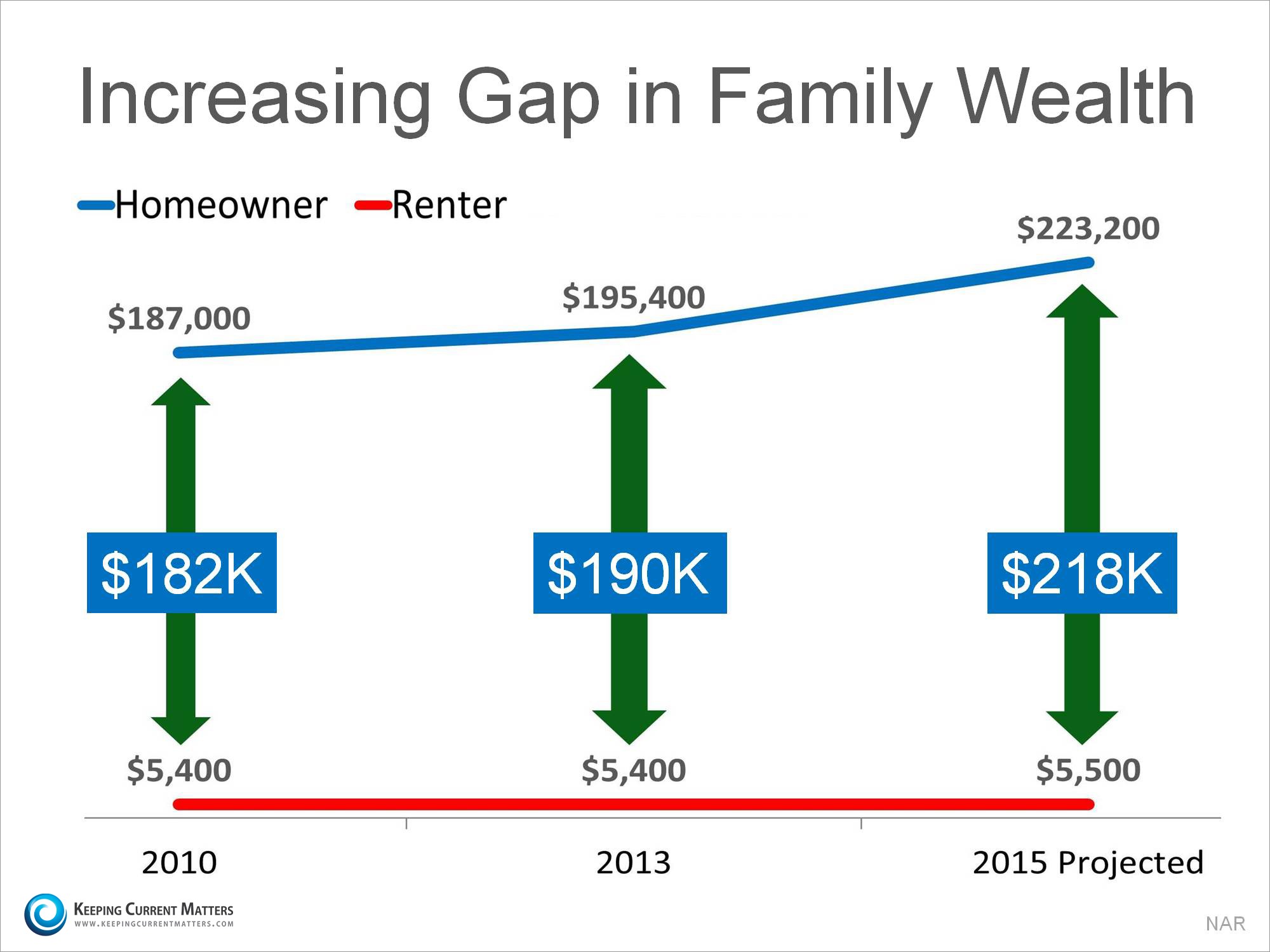
the average net worth of a homeowner ($194,500)
is 36x greater than that of a renter ($5,400).

The National Association of Realtors (NAR) expanded on the Federal Reserve’s research and projected that,

by the end of 2015, the average homeowner will have nearly
41x the net worth of a renter.

That’s nearly 4,100%!

The Gap Widens

Their findings are detailed in the graph below:


One reason for this large discrepancy in net worth is the concept of ‘forced savings’ created by having a mortgage payment and was explained by the New York Times:

“Homeownership requires potential buyers to save for a down payment, and forces them to continue to save by paying down a portion of the mortgage principal each month.” “Even in instances where renters have excess cash, saving a substantial amount is difficult without a near-term goal, like a down payment. It is also difficult to systematically invest each month in stocks, bonds or other assets without being compelled to do so.”

The Takeaway

“As a means to building wealth, there is no practical substitute for homeownership.”

If you are a renter who is considering making a purchase, talk with a Benchmark Mortgage professional who can explain the benefits of signing a contract to purchase over renewing your lease.

click here to find yours

A good realtor has the heart of an educator graphic

Find A Great Real Estate Agent The Easy Way

Looking to buy or sell your home? You may have noticed the vast amount of information available in the news and on the internet about real estate. When trying to make sense of it all, one can easily get overwhelmed or confused.

You need an agent who can help navigate the current housing market. If you are looking to sell, you need an agent who can help you price your home correctly and appropriately. If you are looking to buy, you need an agent who can help you determine what to offer on your dream home (without overpaying or offending the seller with a below-market offer).

How high should you price your home? How much should you offer on a listing? A great agent can help you determine these numbers, and help you come out on top.

Financial guru Dave Ramsey says,

“When getting help with money, whether it’s insurance, real estate or investments, you should always look for someone with the heart of a teacher, not the heart of a salesman.”

An Agent Who Knows Your Market Can Make Your Experience Easier

We admit, this seems rather obvious. But, how do you know whether an agent is really up-to-the-minute on what is happening in your real estate market? How do you know if they will take the time to simply and effectively explain what it all means and how it may affect you?

A simple way to find out is by searching through a real estate agent’s social media channels. What kind of material are they sharing? Are they using their social media platforms to share current, helpful information or are they just posting trendy recipes and inspirational quotes?

The best agents spend time educating and informing so you can be confident when buying or selling your home. What they share online will help you to determine whether an agent meets the description advised by Dave Ramsey above:  

“…you should always look for someone with the heart of a teacher.”

Do you know a great agent like this? What other tips do you have for us? Share this article with your additions.

renting vs buying a home

Renting vs Buying a Home and Accumulating Wealth

Does it make more financial sense to buy or to rent? Is the American dream of home ownership still alive? That depends. Let’s explore renting vs buying a home and the effects on family wealth.

Recently, the BH&J Buy vs. Rent Index seems to conclude that renting is surpassing buying as the better choice. Is it really? Should we let others draw our own conclusions for us? A closer inspection breaks it down. The summary says,

The index conducts a “horse race” comparison between an individual that is buying a home and an individual that rents a similar quality home and reinvests all monies otherwise invested in homeownership.

Let’s assume for a moment that this is true. Any funds that would have been spent on homeownership really are diligently invested by renters rather than spent. Is this a realistic expectation?

We should first consider the general economic advice of not spending more than 25-30% of one’s income on rent. We should also recognize that recommendations are often more conservative than what the population is actually doing. When we put these ideas together, the quoted text above begins to look more like wishful thinking.

Please consider: Housing’s 30-Percent-of-Income Rule Is Nearly Useless from Bloomberg.

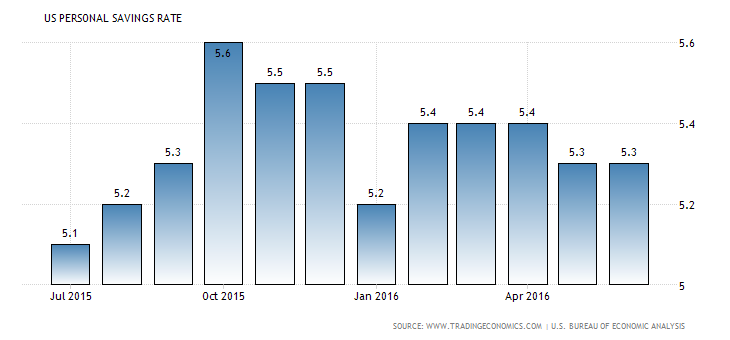
When we look at consumer savings rates, this “wishful thinking” hypothesis is all but confirmed.

United States Personal Savings Rate

embed
source: tradingeconomics.com

It stands to reason that the savings potential of the “if-then” scenario posed by the BH&J Buy vs. Rent Index summary is simply unrealistic. If the average consumer is spending at least 30% of their income on housing, and saving less than 6%, this becomes an unfair comparison. Why?

Forced Savings and the Accumulation of Wealth

An article in the New York Times published November 29, 2014 makes the case for home-ownership against renting. It is a well thought-out article that, if you are weighing the issue of whether to rent or buy, you may want to read.

As the rate of homeownership has declined, from a peak of nearly 70 percent in 2004 to a 20-year low of 64.3 percent recently, the number of owner-occupied homes has barely budged, while the number occupied by renters has increased by nearly 25 percent.

Those trends have led to questions about the future of homeownership. Would more and longer rentals be a bad thing? Are the benefits of homeownership overrated? More…

The article goes on to say,

Homeownership long has been central to Americans’ ability to amass wealth; even with the substantial decline in wealth after the housing bust, the net worth of homeowners over time has significantly outpaced that of renters, who tend as a group to accumulate little if any wealth.

What Does This Mean for You?

If you are taking an honest look at whether it is a better idea to rent or to buy, it is a good idea to consider the facts. There are good reasons for either renting or buying. Whatever decision you make, we at Benchmark are happy to look at your personal situation to help you make the right choice.

do's and don'ts for the mortgage process around christmas graphic

Do’s & Dont’s for the Mortgage Process around CHRISTMAS

The holiday season is always a crazy time, but that’s no reason not to take advantage of the great housing market, and make some new holiday memories in a new home. Benchmark is committed to a smooth and easy mortgage process, keep these simple do’s and don’ts handy as you start your home buying process this holiday season.

DO’s:

· Keep an eye on your holiday budget; remember not to make big purchases that might affect your credit score.
· Be sure and take into consideration your own personal schedule as the holidays tend to get hectic quickly.
· Use your neighborhoods Christmas decorations to gauge the atmosphere of the community.
· Call your Benchmark mortgage professional l to start your home search today! Nothing is better than a Christmas spent in a new home!
· Remember it is the holiday season for your loan officer and realtor. While they will gladly assist with any questions you might have, be mindful of their time.
· Let Santa and the Elves know that you have moved addresses!

DON’TS:

· Don’t make any large purchases (things that require credit checks or opening new lines of credit). This can affect your credit score and change your loan status.
· Don’t wait until the last minute to complete and send the required documents to your loan officer. Doing it in a timely manner will ensure a smooth loan process.
· Don’t rush putting an offer on a house just because you can close before the holiday season. Remember, this is a long-term decision.
· Don’t use your entire down payment on holiday gifts. Save the money you can.
· Don’t accept monetary gifts from relatives without consulting your loan officer first. (Monetary would be like down payment assistance)

What Every First Time Home Buyer Should Know

If you’re planning on buying your very first home, chances are you are not taking the decision lightly, and for good reason. You should conduct as much research as possible about the process before you commit to your first home. Here are some things that every first time home buyer should know before purchasing a home.

Location Vs. Space

When it comes to purchasing a home, you’re likely going to have to choose between location and space. Should you go for a small house in your favorite city, or should you get the large house located in a less desirable area? Therefore, before you start shopping for a home, you should definitely know where your priorities lie. You need to decide beforehand whether space or location is more important to you. Doing this will make the home-buying process much easier for you, and it also reduce the chance of you experiencing buyer’s remorse later down the road.

Don’t Commit Too Early

One of the worst things you can do as a first time home buyer is commit too early to a home. Since owning a home is such a big and expensive commitment, you should only purchase a home when you’re sure that you’re ready for the responsibility. Know that your monthly housing expenses will likely increase by hundreds, even thousands, of dollars when you become a homeowner. Besides the monthly mortgage payment, you should consider if you’re financially ready to pay for property taxes, HOA fees, and homeowner’s insurance as these costs can truly add up.

Down Payments

If you have the money and can afford it, you should definitely make a down payment on your home. In fact, you should be saving up money now, so you can make a substantial down payment on your new home once the time comes.

Believe it or not, but a down payment is never a bad investment. When you invest money in the stock market, while there’s a chance that you will gain, there is also the likelihood that you will lose money. However, when you put money down on a home, it minimizes the risk and it enables you to begin with some equity.

Consider School Districts

Even if you don’t have children, you should still consider the neighborhood’s school district when going shopping for a home. A good, desirable school district can actually raise the value of your home. Reselling a home located near quality schools is usually easy, because demand for a good home in an excellent school district is always high.

Check Building Plans

Before you purchase your first home, you should check the future building plans for the neighborhood. First of all, you don’t want to live next to the sound of nails being hammered for months and months. While this situation will only be temporary, you may not want to be located next to the project being built. For example, if you don’t have any children, the last thing you’ll want next to your home is a playground, because you’ll have to listen to the squeaking of swings and the yelling of children, and you won’t benefit at all.

Look Deeper

When inspecting a home, you should take the time and effort to look deeper. Take the words of others with a grain of salt, and check out the house for yourself. If a problem happens to pop up during your inspection, take it seriously, especially if it’s a problem that could be particularly expensive to fix.

If you end up discovering a flaw while inspecting the home you like, you can actually use it to your advantage. After the inspection, try negotiating to bring the price of the house down, using the flaws of the home to support your case. As you can see, it’s not impossible to get a great deal on a home even after the inspection.

Establish Your Budget

Before you even start hunting for your perfect home, you should establish your budget. There’s nothing more disappointing than completely falling in love with a home, only to not able to purchase it due to lack of financing.

Not only should you establish your budget, but you should also secure financing. Many people make the mistake of not locking down a mortgage quickly, because they believed that house hunting for the perfect home would take a long time. By the time they’ve secured a loan for their home, they often end up losing the very home they had such high hopes for.

Check Out Renovations

One thing you should pay close attention to is whether the renovations of the home you’re interested in were done by a professional. While structural details are very important, a home’s aesthetic details should not be ignored. Many DIY remodelers use low-quality materials for a quick, cheap fix. These materials are often low in durability, resulting in problems for future homeowners when everything is said and down.

Inspect the Landscaping

Many people don’t realize that updating the exterior of a home can be just as costly, if not more so, than remodeling a home’s interior. If your goal is to not spend much money on the details once you’ve found a home, you should definitely pay attention to the landscaping of the home. Look for a property with landscaping and amenities that you already consider ideal without any costly changes. For example, it’s typically much cheaper to purchase a home that already has a fence than to install the fence yourself. However, just as you should when inspecting the interior of a home, you should pay close attention and figure out whether renovations were done by a professional.

The home buying process is far from being a piece of cake, especially if it’s your very first time going through the process. Therefore, you should make an effort to become as informed and knowledgeable as possible before making a decision. Being a homeowner is a huge responsibility and commitment, so you definitely want to avoid doing something you’ll regret later on.


What every first time homebuyer should know

Lesson: Home Insurance 101

One aspect of buying a home that people don’t pay enough attention to is homeowner’s insurance. Although lenders require everyone buying a house to get some insurance covering basic risks like theft and vandalism, fire and smoke and other common forms of unintentional damage, such insurance is usually inadequate for your long term needs.

Adequate Coverage

Soon after becoming a homeowner, one of your top priorities should be to expand your homeowner’s insurance so that it becomes more comprehensive. For example, you will want your insurance to cover such things as personal items, your furniture and any structures on your property besides the house. These structures could be a garage, a shed or even a pool. However, if any of these additional structures are used for a home based business, then to cover them you will need a different type of insurance entirely, one that is geared more towards business needs.

Not Covered

If you don’t have a home business, but nonetheless keep business equipment at your home, then it will not be covered under standard homeowner’s insurance. The coverage is also likely to be minimal for such calamities as earthquakes and natural disasters or for the loss of extraordinarily expensive items in your house such as jewelry or works of art. You will need to purchase supplemental insurance in order to cover these things.

Personal Liability

One category where you should definitely add extra insurance is the area of personal liability to protect you from lawsuits if someone is injured on your property. It also gives you protection should your child or pet cause damage to other people’s property. Few lenders require you to have liability insurance, but it can prevent you from losing your home if you end up liable for somebody else’s medical bills or property repairs.

Protecting Your Insurance

The ease of availability for homeowner’s insurance varies from state to state. However, once you purchase insurance, you need to take steps to protect it. Resolve to avoid making claims unless it is absolutely necessary and fully justified. Otherwise, you may find your premiums rising to unaffordable levels or being discontinued entirely. One good idea is to have a high deductible so you are not tempted to makes claims over minor matters.

The best way to ensure that you are not caught short with too little insurance is to call your insurance professional today.

Home insurance concept

Common Mistakes When Buying & Refinancing

When buying or refinancing a house, you will want to avoid common mistakes. If you can do so, you will save money and help your cause greatly. With this in mind, here are the top four common mistakes to avoid when you want to buy or refinance a house.

Mistake 1: Not Understanding Rates

First and foremost, when you borrow tens of thousands of dollars, you will want to know as much about rates as possible. At Benchmark, your mortgage professional will help you do so by reviewing your credit score and letting you know exactly where you stand. They explain what the current rates are and help determine which loan product will best fit your financial needs. This will allow you the opportunity to learn how your monthly payment can change drastically by knowing how the rates and loan products work.

Mistake 2: Ordering Your Own Appraisal

Now, if you are refinancing your property, don’t think that in addition to a Benchmark Appraisal you are required to independently verify the value of your house. Benchmark’s Appraiser Panel is staffed with many of the local appraisers found in your area. At Benchmark, we ensure that you receive top quality appraisal reports so that there is no struggle to enjoy the lowest rate when you refinance your home.

Mistake 3: Looking At Entire Costs

All-too-often, a buyer or homeowner will forget to look at other costs associated with the loan. Sadly, they can add up quickly and leave you with thousands of dollars of fees added on to the loan. To avoid this, look at the paperwork and ask questions with your Benchmark Mortgage professional. If you feel it contains inaccurate information, speak up. Your Benchmark Mortgage professional will help ease your concerns and answer any questions you may have. We understand that wasting money on closing costs and other fees is the last thing you want to do so we are here to help assist you every step of the way.

Mistake 4: Not Fixing Credit

Finally, when buying a house or refinancing, you will want to clean up your credit and pay off old debts. If you don’t, you may not qualify for the lowest rates possible. For example, if you have a score of under 650, you may end up paying more than a person with a score above 750. So be sure to pay off any old debts, fix any errors on your report and catch up on any late payments. Otherwise, you may end up paying a higher interest rate.

With these four simple tips, you can ensure your refinance or house purchase goes smoothly the first time around. Remember, you need to protect yourself and avoid common pitfalls others make. When doing so, you will save money and speed up the process.

Happy couple in front of home

Why Getting Pre-Approved for a Mortgage is Important

While plenty of people pick out the house they want and then go to the lender for a mortgage, this is actually quite backwards. If you are hoping to purchase a home soon, getting pre-approved for a mortgage should be the first item on your list. Here are some reasons why this will make buying a house a much less painful experience with a pre-approval in hand.

Establishing a Purchase Range

There is no sense in viewing homes you cannot afford. Getting a pre-approval will give you an idea as to how much you can reasonably purchase, so there will be no let-down later in the process. Having a range to use when house hunting will save you time and frustration, as well as save the time and frustration of homeowners and your realtor. Your pre-approval amount will also tell you how large of a down payment you will need, which is largely dependent on how much you are approved to borrow.

Finding Credit Problems First

Some people decide to buy a home and have one picked out, only to find out that their credit is destroyed and they don’t qualify for a mortgage. In another scenario, you may think you are prepared to buy and find out your score is only 20 points from being within prime range. Getting a pre-approval first will tell you what you can reasonably expect to be offered from lenders. Then, you will be able to make your own decision about whether or not you want to focus on some credit repair before taking the plunge.

Allowing You to Move Quickly

If you are searching for the perfect house and find it without being pre-approved, another person can swoop in and buy it before you can get all of your paperwork in order. This is not uncommon at all, as many people find the house, make an offer and close within 30 days. If you want to be able to snap up the right house for you, having a pre-approval can help speed the process.

Getting a pre-approval for a mortgage is important because it will save you time and effort. If you need to do some credit repairs first or gather some documentation, you won’t have two realtors and a homeowner waiting on the process. If you are serious about home ownership, having a pre-approval in hand will make it easier for everyone involved.

Pre-Approval

Top 10 Mortgage Tips

When getting a mortgage, you should do your research and know how to proceed wisely. For most inexperienced buyers, this is hard. However, if you can follow these top 10 mortgage tips for borrowers, you will land the best mortgage at the lowest APR.

1. Document

Above all else, when you want to borrow a large sum of money, you will want to document your finances. Then, when you have to head to the bank and speak with a lending representative, you can avoid any unnecessary delays in the process.

2. Lock In Early

With a mortgage, you will want to lock in rates quickly. Remember, the APR will fluctuate, and you will want to get in at the best time.

3. Commit to a Lender

Now, more than ever, there are plenty of banks and mortgage companies and it is easy to get sucked into “shopping around”. When you commit to a great lender, you give them the confidence to put 100% into finding you the best mortgage program knowing you are a committed client.

4. Look At Credit

Before getting a mortgage, you need to look at your credit. If it is in great shape and you have a score of over 750, you should not take action. On the other hand, if you have a low score, you should fix your credit and pay off old debts.

5. Keep Your Down Payment Small

If you have a lot of cash saved up, you should not put it all on the down payment. Think about it, when getting a house, you will need cash to make repairs and upgrades. Luckily, with a few grand in savings, you can pay for this easily.

6. Be Aware Of Rights

Now, a consumer enjoys plenty of protection when he or she takes out a mortgage. Of course, you should still read up on these laws.

7. Start Early

When you want to get a mortgage, you should start early. Otherwise, you may end up with problems when one delay after another occurs.

8. Look Local

Having a physical location to walk into is comforting versus working with an “online only” lender. Benchmark is based in the community.

9. Really Think About It

Now, a home purchase is a big deal. To avoid overspending, work with a professional mortgage planner who can help you stay within your budget for your new home.

10. Do Not Fear

Without a doubt, getting a mortgage is not a scary process.

With these 10 tips, you can land the mortgage you want. Not only that, you will experience fewer problems when following these tips.

Top 10 Mortgage Tips

Top 10 Tips When Building A New Home

Top 10 Tips When Building A New Home

A lot of people don’t want to buy a house that’s on the market. They want their house to truly be their own. In some of these cases, these people will probably look into building their own home. This is an option that some people may not even take into consideration. But don’t let that stop you!

While building your own home can be an exciting venture, it can also be quite challenging. Here are the top 10 tips you need to know before you decide you want to build your own home.

1. Have a Clear Budget

One of the most important things is ensuring that you aren’t over-spending. It’s very easy to get carried away and fill your home with everything you want. This can make the price add up extremely quickly. The cabinets, flooring, and lights can always be upgraded later. Make sure you have a clear amount that you are okay with spending.

2. Pick a Good Builder

Not every builder is equal. It’s important to make sure your builder is reputable.

3. Pick a Good Locale

You want to make sure you’re close to everything you need. If you have kids, you may want to make sure that your new house is close to a school.

4. Keep Everything in Writing

Your interpretation of what you want and your builder’s interpretation of what you want may vary. Write everything down and go over everything with your builders. This ensures that your expectations and wants are very clear. 

5. Don’t Make Unnecessary Changes

During the idea and planning stage, something may seem better on paper than in real life. Not everything is going to look the way you anticipated. If it’s something that you can see yourself getting used to, there’s no need to make a change. If it’s completely unbearable, you can make the change. However, remember that making changes will cause a delay and add to your costs.

6. Keep Your Relationship Professional

It’s important that your relationship with your builder remains professional. It may be a little too awkward to hire someone like your brother or father to build your house. 

7. Be Involved

When you hire your builders, don’t just let them go on without any guidance or supervision. It’s important that you are involved in the process. This allows you to check up on progress and you can spot any issues before time runs out. You don’t want to show up on the last day of building and notice a ton of things that could have been fixed previously.

8. Prepare for Delays

No matter your builder says, the timetable for building a house always varies. Don’t let your expectations get too concrete. it’s important to be flexible.

9. Be Understanding

It’s important to make sure that you aren’t being too demanding of your builders. You may come to find that one of your ideas or plans will not come to fruition. Don’t get upset and let it go

10. Have Temporary Housing

As mentioned previously, you want to be prepared for delays. If the building process goes on longer than anticipated, it’s important that you have a place to stay.

Building a House