You are here: Benchmark Home » Buying a Home » Page 5

Category: Buying a Home

Millennial on scooter wearing hat and sunglasses looking up towards the blue sky

What is the Affect of Student Loan Debt On Homeownership?

Millennial on scooter wearing hat and sunglasses looking up towards the blue sky

With student debt making headlines on a regular basis, and the rates of homeownership being lower, is there a connection? Maybe.

In the first issue of Consumer & Community Context, a publication from the Federal Reserve, an article by Alvaro Mezza, Daniel Ringo, and Kamila Sommer, Federal Reserve Board Division of Research & Statistics  entitled, “Can Student Loan Debt Explain Low Homeownership Rates for Young Adults?”, Mezza et al write,

While many factors have influenced the downward slide in the rate of homeownership, some believe that the historic levels of student loan debt have been particular impediments. Indeed, outstanding student loan balances have more than doubled in real terms (to about $1.5 trillion) in the last decade, with average real student loan debt per capita for individuals ages 24 to 32 rising from about $5,000 in 2005 to $10,000 in 2014. In surveys, young adults commonly report that their student loan debts are preventing them from buying a home.

and,

We found that a $1,000 increase in student loan debt . . . causes a 1 to 2 percentage point drop in the homeownership rate for student loan borrowers during their late 20s and early 30s.

In a study by the Federal Reserve in 2017, they found that every $1k in student loan debt postpones homeownership by about two and a half months. However, “postponed” is not the same as “canceled”! By time time higher education graduates reach their thirties, student loan debt has a reduced affect on rates of homeownership.

We have written before about the wealth-building power of paying a mortgage over paying rent, and student loan debt is similarly and investment into one’s career. The boosted earning potential of a generation of more college graduates is bound to catch up to the burden of the debt that helped fuel it.

Is it better to pay down debt, or to save for a down payment?

There is no one-size-fits-all answer to this question. No matter whether you have prioritized paying your student loan debt or saving for a down payment, if you would like to take a closer look at what makes the most sense for you, contact us. Our job is to work with you to find the right solution for your financial goals.

Find your Benchmark branch and contact them today for more information.Give us a call or contact us today. At Benchmark, we’ve got your back.Give me a call, send me an email, or request a call today. My team and I got your back.

Man with briefcase walking towards destination

Before You Buy, Do A Financial Self Exam

Man with briefcase walking towards destination

Thinking about buying? If you are serious about owning your very own piece of the American Dream, it makes sense to take inventory of your current finances. By taking a closer look, you will have a better idea of whether you are ready to grab your dream of homeownership by the horns or whether you want to make some adjustments first.


If you haven’t read last week’s post, we recommend you do so. It will help give you a clear idea of what it takes to buy.

Read it now: How To Buy A House In 2019 — 5 Tips


Now, read on. Here are a few considerations before you decide to buy.

Emergency Fund Integrity

Many financial experts recommend that you have 3-6 months worth of expenses saved up in an Emergency Fund. An emergency could be a car repair, appliance replacement, or sudden unemployment. Rainy days happen, and a substantial rainy day fund can help protect you from the financial blow.

While it is true that a bigger down payment will equate to a smaller monthly mortgage payment, it probably isn’t the best idea to tank your emergency fund. You might even consider opening a separate savings account for your down payment, as we mentioned last week: How To Buy A House In 2019 – 5 Tips

Debt-To-Income Ratio (D.T.I.)

You can think of this as a ratio of current monthly income and payment obligations. Your DTI is communicated as a percentage, where lower is better. A low deb-to-income ratio implies that you have a high cashflow relative to your income, and gives the impression that you are responsible with your finances. It also means that you are at a lower risk for defaulting on a payment, which lenders like.

Is your monthly debt obligation higher than you would like it to be? Here are a couple of ways to cut it down without significantly altering your lifestyle.

Credit Cards

Do you have any credit card debt? Your minimum monthly credit card payment total is factored into your D.T.I. If you have a card with a low enough balance that you could pay it off sooner, you could effectively reduce your debt factor. Doing this repeatedly is commonly known as the “debt snowball,” an emotion guided strategy for paying down debt.

Car Loan

Are you working on paying off a car purchase? If you make payments on a car loan that is relatively close to being paid off, paying it off will reduce your debt score by the monthly required payment on the loan.

Credit History

Is your credit history accurate? Do you have a copy of your credit report? It is a good idea to get a copy of your credit report to check for any errors.

You can contact the credit bureaus if you find an error, and work with them to correct it on your credit report. While a ding on your credit history may not be enough to deny your loan application, it may end up costing you big in the form of a higher interest rate.

You have the right to request 1 free credit report each year. Many credit card companies offer this as a service, as do many identity protection services. You can request your credit report and current credit score from Experian, TransUnion, or Equifax.

Need A Second Opinion?

We know that crunching the numbers isn’t for everyone. Even if you are the best candidate for management of your own finances, not everyone feels motivated to sift through their own numbers. At Benchmark, we advocate for the best financial outcome for our clients.

I am willing to help you order your finances so you can make the most informed decision possible. Call me today, or contact me now.

We work with our clients to help you make the most informed decision possible. Call or contact us today.

We work with our clients to help you make the most informed decision possible. Find your branch, and contact them today.

 Benchmark brings you home.

benchmark circle icon


Flying sidekick performed by black belt martial artist in martial arts studio

How To Buy A House In 2019 – 5 Tips

Flying sidekick performed by black belt martial artist in martial arts studio

If you want to buy a home this year, here are five tips on how to buy a house in 2019. At Benchmark, we make the effort to make it easy to claim your piece of the American Dream.

Watch this video, then read last week’s article linked below.

This New Year, Reach Your Dream of Homeownership

1) Know Your Target Home Value and Down Payment

To be able to know if you can realistically afford to be a homeowner, you should first explore your local housing market to find out how much you should expect your new home to cost.

You can use the “How Much House Can I Afford?” tool to get a realistic estimate. We also have a variety of Calculators right here at Benchmark.us to help calculate a number of factors, comparisons, and scenarios.

To get an idea whether the house you have your eye on is priced fairly, you should also ask your real estate agent for a Comparative Market Analysis. (see also: Find A Great Real Estate Agent The Easy Way)

When you have an idea of the cost of your future house, you can roughly calculate how much you will need for your down payment. Think you need 20% down?

Think again. See last week’s post, “This New Year, Reach Your Dream of Homeownership” if you haven’t already.

2) Know Your Cash Flow

Saving can be challenging, especially if you are not used to tracking your expenses. To improve your chances of saving success, you should know where every dollar that you earn is going every month. Check with your bank or credit union, as many banks and credit unions include tools for this. You can also use third party tools like Mint, YNAB, everydollar or even a simple spreadsheet. The more organized your plan towards achieving the goal, the more successfully you will be able to save.

If you read our previous post This New Year, Reach Your Dream of Homeownership, you will recognize the link between consistent savings and your down payment. A budget can help you do that.

If it will take you several months or years to save for your down payment, you could even consider opening a high yield savings account to get your savings earning as well.

3) Know How Much House You Need

For many, the first home you buy is not the first home you want. If the home you want is beyond your financial reach, it could still make sense to settle on a less expensive buy, if your budget and standards allow.

It could cost you far more money in the long run to wait until you can afford the house you want, when a house you could be happy with is within reach now. You can always “trade up” when the time is right. You will have to make this decision for yourself, but it is something to think about.

In an earlier article entitled Millionaire Tells Millennials To Buy A Home, we mention that David Bach, author of “The Automatic Millionaire” is quoted as saying,

“The fact is, you aren’t really in the game of building wealth until you own some real estate.”

Mr. Bach also said,

“Oftentimes, buying your first home means you’re not buying your dream home. You’re just getting into the market.”

If that isn’t enough, you can read “Homeowner Average Net Worth 3,600% Higher Than Renter” for more reasons to consider getting started sooner rather than later.

4) Know The Steps For Buying A Home
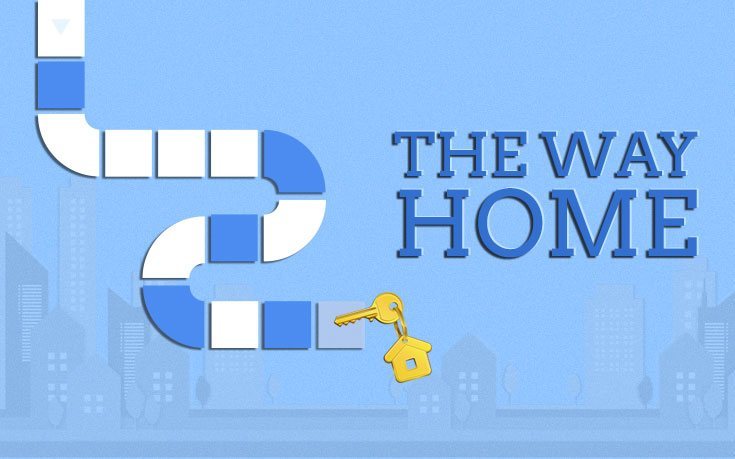
The Way Home graphic

I have a convenient interactive tool right here on my website to help walk you through the steps to take when buying a home.

Discover Your Way Home

We built a tool for our Loan Officer websites that asks a series of questions to give you an personalized step-by-step plan for buying your next home. Need a plan for refinancing? It does that too.

To use this tool for yourself, you will need to find a loan officer in your area Find Your Loan Officer, then click on “The Way Home” in the navigation menu.

To use this tool, you will need to find your Loan Officer and go to their website by clicking the link that looks like this:

Visit My Website branch website link screenshot

Once on your loan officer’s website, look for the “The Way Home” navigation link (below), and click.
The Way Home visual navigation screenshot.

5) Keep Your Cool

Do you feel overwhelmed by what appears to be a monumental achievement? We understand. Do you wish it could seem easy? This is what we do every day.

At Benchmark, we have such a great team, that we have been able to make mortgages happen for borrowers who had already been turned down by another lender.

Not sure where to start? No problem. We are honored to help guide to towards your dream of owning your own home with a mortgage that aligns with your personal financial outlook.

Even if you are concerned with debt, your credit history, or even your down payment, let’s chat! If you want to make your dreams a reality, we are here to help make that possible.

Find your branch, and contact them today. If you are ready, you can click to Apply Now. We look forward to helping you reach your goals!Call or email us, or Contact Us today. If you are ready, you can Apply Now. We look forward to helping you reach your goals!Call me, Email Me, or Contact Me today. If you are ready, you can Apply Now. I look forward to helping you reach your goals!


Good News is Coming sign posted on light post

This New Year, Reach Your Dream of Homeownership

Good News is Coming sign posted on light post
Photo by Jon Tyson on Unsplash

Every year begins with renewed hopes and bright aspirations embodied by the shared cultural vow we all seem to take: the New Year’s Resolution. If your Resolution involves any aspect of ‘home’ or financial strategies, purchasing your first home and homeownership may be on your mind.

You Are Not Alone

Among renters under the age of 50, 72.7% reported a preference for buying, with 52.5% reporting that they strongly prefer buying, and the remaining 20.2% reported a normal preference. If you are like most other renters under the age of 50, the odds are good that you would prefer to own a home, even if you currently rent. Is homeownership right for you?
(source: https://www.newyorkfed.org/microeconomics/sce/housing#indicators/Renters/g42)

Is Housing A Good Investment?

Attitudes toward housing as a financial investment became more positive than they already were: 65% of all respondents think that buying property in their zip code is a “very good” or “somewhat good” investment, compared to 60% in 2016. Only 10.6% think housing is a “bad” investment. Enthusiasm about housing as investment is particularly pronounced among younger, more educated (Bachelor’s degree or more), and higher-income (annual income of $60,000 or more) households. – source: https://www.newyorkfed.org/newsevents/news/research/2018/an180418

While it is not our (Benchmark) place to recommend any investment strategy, Americans seem to view homeownership as a favorable investment overall. You can read these posts from our archive for more information on this:
Renting vs Buying a Home and Accumulating Wealth
Buying Still Cheaper Than Renting
Homeowner Average Net Worth 3,600% Higher Than Renter
Why Buying Is Investing

Can You Afford To Buy?

One of the biggest hurdles in a market where property values have been on the rise is having enough cash for a down payment. The median listing price in the United States is $276,000 (retrieved from https://www.zillow.com/home-values/ on January 4, 2019 at 4:12pm). So, how much down payment is required?

Related: Nervous About Buying? Here’s A Dose of Confidence

Most people tend to believe that you need 20% of a home’s price for a down payment. ApartmentTherapy.com created the following table based on the assumption of the median home price for each state, 20% of the down payment, and how much one should save each month for six and a half years. (If you are just starting in January 2019, you won’t be ready with your 20% down until the buying season is in swing in 2025.

State Median Home Price Down Payment Monthly Savings Plan
Alabama $171,500 $34,300 $440
Alaska $267,404 $53,480 $686
Arizona $225,000 $45,000 $577
Arkansas $156,000 $31,200 $400
California $462,000 $92,400 $1,185
Colorado $331,000 $66,200 $849
Connecticut $253,500 $50,700 $650
Delaware $210,000 $42,000 $539
Florida $218,000 $43,600 $559
Georgia $193,000 $38,600 $495
Hawaii $442,500 $88,500 $1,135
Idaho $349,000 $69,800 $895
Illinois $212,000 $42,400 $544
Indiana $190,843 $38,168 $490
Iowa $157,000 $31,400 $403
Kansas $187,649 $37,529 $482
Kentucky $170,000 $34,000 $436
Louisiana $232,610 $46,522 $597
Maine $275,717 $55,143 $707
Maryland $379,000 $75,800 $972
Massachusetts $150,000 $30,000 $385
Michigan $164,000 $32,800 $421
Minnesota $240,000 $48,000 $616
Mississippi $195,390 $39,078 $501
Missouri $204,506 $40,901 $525
Montana $314,959 $62,991 $808
Nebraska $178,000 $35,600 $457
Nevada $249,300 $49,860 $640
New Hampshire $245,000 $49,000 $629
New Jersey $290,000 $58,000 $744
New Mexico $254,798 $50,959 $654
New York $430,000 $86,000 $1,103
North Carolina $210,000 $42,000 $539
North Dakota $226,863 $45,372 $582
Ohio $154,900 $30,980 $398
Oklahoma $150,000 $30,000 $385
Oregon $315,000 $63,000 $808
Pennsylvania $191,000 $38,200 $490
Rhode Island $256,000 $51,200 $657
South Carolina $181,500 $36,300 $466
South Dakota $177,500 $35,500 $456
Tennessee $190,000 $38,000 $488
Texas $320,067 $64,013 $821
Utah $440,946 $88,189 $1,131
Vermont $325,000 $65,000 $834
Virginia $297,500 $59,500 $763
Washington $332,719 $66,543 $854
West Virginia $136,500 $27,300 $350
Wisconsin $197,000 $39,400 $505
Wyoming $291,855 $58,371 $749

table and data copied from: https://www.apartmenttherapy.com/home-down-payment-cost-by-state-2018-261916

The Cost of Waiting

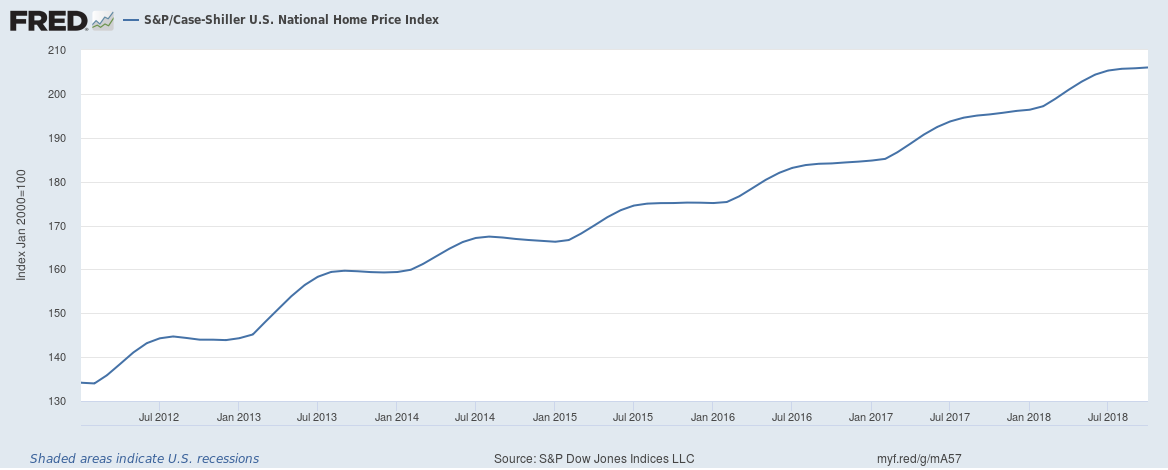
When looking to put 20% down, consider the cost of waiting six years. Since January 2012 until January 2019, the national home price index has inflated by 53.56%.

Federal Reserve Economic Data (St. Louis Fed) Home Price Index chart

source: https://fred.stlouisfed.org/graph/?g=mA5v

If you have owned your home for a few years, this is wonderful news! If you have been saving for a 20% down payment on a home that was listing for $134k in 2012, it is now likely going for $206k, and your 20% down payment has gone from $26.8k up to $41.2k. How would this factor into your savings plan if you took the advice of the table provided above?

Will home prices continue their upward climb? No-one knows. If it does, you could miss out on equity gains and purchase opportunities while saving for a 20% down payment. Is there an easier path to homeownership? What if you didn’t have to put down 20% to get a mortgage?

You Don’t Always Need 20% Down*

If you qualify for a Conventional mortgage loan (based on a variety of factors, including credit score, income, debt, and financial history), there are products available for as little as 3% down!*

For first time home buyers, an FHA mortgage requires as little as 3.5% down, and require a minimum credit score of less than 600!*

Let’s take a look at this practically.

Assuming a list price of $276,000.00, 3% down equates to $8,280. If you were following the 6.5 year plan towards 20% down, you would be saving $707.69 every month for 78 months. BUT, if you plan to put 5% down instead, you could get there in only 19.5 months following the same savings plan. That makes you a homeowner ~5 years sooner!*

0% Down Programs

If you are a Veteran who qualifies for a VA Mortgage Loan, it is possible to buy with 0% down.
USDA loans are also candidates for 0% down qualification.*

Down Payment Assistance

Down payment assistance programs may be available in certain counties and states. Ask your Benchmark loan officer if there are any available in your area.

This Year, Make Your Dream A Reality

Even if you don’t have enough for a down payment, if you think your debt is holding you back, or if you don’t think your credit is good enough, let’s chat.

Find your branch, and contact them today. If you are ready, you can click to Apply Now. We look forward to helping you reach your goals!Call or email us, or Contact Us today. If you are ready, you can Apply Now. We look forward to helping you reach your goals!Call me, Email Me, or Contact Me today. If you are ready, you can Apply Now. I look forward to helping you reach your goals!



* Ark-La-Tex Financial Services, LLC NMLS ID #2143 (www.nmlsconsumeraccess.org) is not a law firm, accounting firm, tax firm, or financial planning firm. This advertisement is for general information purposes only. Anyone relying on particular details contained herein does so at his or her own risk and should independently use and verify their applicability to a given situation. All loans are subject to borrower qualifying and meeting appropriate underwriting conditions. This not a commitment to lend. Some products may not be available in all licensed locations. Information, rates, and pricing are subject to change without prior notice at the sole discretion of Ark-La-Tex Financial Services, LLC. Other restrictions may apply. (https://benchmark.us)

benchmark circle icon

photograph of child jumping on bed

FHFA Announces Conforming Loan Limit Increase In 2019

photograph of child jumping on bed

The Federal Housing Finance Agency has announced that the maximum conforming loan limits for mortgages has increased.

In most of the country, the confirming loan limits will increase nearly 6.5%, from $453,100 to $484,350 for 2019. For most high-cost areas, where 115% of the local median home value exceeds the loan limit, the loan limit for one unit properties will be $726,525.

What Does This Mean for Homebuyers?

You can now purchase a home with a higher sales price using a conventional conforming loan through the FHFA regulated Fannie Mae or Freddie Mac.

The new limits are effective January 1st, 2019. Typically, the VA and Federal Housing Administration (FHA) are expected to adopt the same increased loan limits for 2019 for FHA and VA loans.

Source: https://www.fhfa.gov/Media/PublicAffairs/Pages/FHFA-Announces-Maximum-Conforming-Loan-Limits-for-2019.aspx

Dose of confidence: nervous about buying? Don't be.

Nervous About Buying? Here’s A Dose of Confidence

Dose of confidence: nervous about buying? Don't be.
If you are interested in buying a house, but do not know what you might need, or whether you can qualify, you’re not alone. Many would-be buyers are intimidated by the thought of what it takes to buy a home. Some wonder whether they can afford to buy, if they have enough saved for a down payment, or if their credit is good enough.

Can You Relate? If So, You’re In The Right Place!

Be confident that you can do it! The basics are pretty simple. To qualify in the current market, you will need a down payment (would you believe that you don’t need 20%), a stable income, and a good credit history.

You will have contact with your lender, your agent, and other professionals whose roles help get you into your home. These pros are also valuable resources on your journey home.

5 Easy Steps

Ready to apply? Here are 5 steps to follow as suggested by Freddie Mac:

  1. Check your credit score and history.
    Though the average FICO score for closed loans was 731 (September 2018 according to Ellie Mae), there are loan products for a wide range of scores. It’s just a good idea to know where you stand before applying.
  2. Gather your documents.
    You will need to be able to verify your income, which you can do with W-2 forms or tax returns, your credit history, and statements verifying cash assets (bank statements, investment statements, and the like).
  3. Contact your loan officer!
    Your loan officer can help you develop a spending plan, help you determine how much home you can afford,review your income, expenses and financial goals, and recommend a real estate agent who knows the market and will work for your best interests. With a pre-approval letter in hand, sellers will see your offer as legitimate, and will be more likely to accept. You may get pre-approved by your loan officer. Don’t have one? Find yours today!Meet our team or contact us today!That’s me! Contact me today, or Apply Now!
  4. Contact your real estate agent.
    Your real estate agent can help you find the right home for you in your price range, be your advocate in pricing negotiations, and be a great source of advice in the specifics of what you’re looking for in a home, neighborhood, and location.

Take Action

Armed with the information above, you are ready to start doing your own research. Just remember to know how much house you can afford, stick to your budget, and be mentally and emotionally prepared. Making dreams come true takes a little effort and responsibility. At Benchmark, we are here to help make it as easy as it can be.

Ready to get started? Apply now. Want to explore your options? Find your loan officer and contact them today!Contact us today!Contact me today!

the sun rising in the distance

Can I Still Get A VA Loan With Bad Credit?

the sun rising in the distance

Unfortunately, it depends on the situation and reasons, so there is no simple answer for bad credit. A few potential reasons could be that you have experienced a divorce which led to a bankruptcy, mismanaged your finances, experienced job loss, or any other financial hazards.

Your credit is calculated from many moving parts. The good news is that your credit score is constantly changing! If you take steps to improve your financial habits, you may also gain an improved credit score in addition to greater peace of mind.

At Benchmark, we don’t leave you to figure it out all on your own.

You are working hard for the chance to buy your dream home. Shouldn’t your lender ,at least, work just as hard?

Knowing what improvements to make when improving your credit can be tricky. That’s where we can help. For example, while some factors apply to everyone, there will be others that only apply to you.

Some strategies you could use to positively impact your score very quickly are:

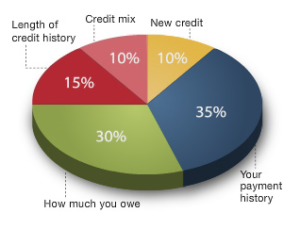
  1. Keep credit card balances low: I like to call this the rule of 30. Your balance accounts for 30% of your credit score. You want to make sure that your utilization ratio is less than 30%. For example, if you have a credit limit of $1,000, your balance should NEVER exceed $300. If you are already over that, pay it down to where it is less than 30%. By far, this is the mistake that most people make.
  2. Pay your debts: This is not always as simple as it seems, but this accounts for 35% of your score. Something to keep in mind is that paying off new debt has a greater impact than paying off old debt. If you have a newer open credit card, pay that balance first.
  3. Clear up any mistakes: Did you know that as many as 4 out of 5 people have errors on their credit reports*? The odds that you may be one of them are high at 80%. While you can pull your own credit for free once a year, credit reports can be difficult to read. At Benchmark, we review your credit report with you to ensure your credit’s accuracy. If errors are found on your report, you have the opportunity to correct them.
    *https://www.cbsnews.com/news/4-in-5-credit-reports-have-errors/

Ratio of used credit and payment of debt combine to account for 65% of your score. The next biggest factor is time, or the length of your credit history. If you are trying to improve your credit, it is important that you do not close your credit card accounts. This hits you on two categories: one is your credit utilization ratio ,or how much you owe, because the ratios will not be calculated properly on closed accounts (you’d have debt, but no extra credit limit), and the other is on length of credit history, because a closed account does not report a length of time.

Chart of credit status and new mortgages
Image source: https://www.cbsnews.com/news/4-in-5-credit-reports-have-errors/

Overall, there is no single quick technique to improve your credit score. It’s best to simply live within your means, by not spending more than your income. If you’d like more information, give us a call. We can help you get a more personalized view of your credit, and help you decide what you can do to improve it.

At Benchmark, we are ready to help you achieve your dream of owning your own home. Call 1-800-VET-EASYus or Contact Us, or get your Certificate of Eligibility to get started today!

young couple unpacking in their new home

2018 Homeownership Profiles: Millennial Buyers

young couple unpacking in their new home

In 2017, Australian millionaire Tim Gurner famously attempted to blame millennial homebuyer obstacles on their inability to avoid frivolous spending on $19 avocado toast, in comments that were widely mocked throughout the internet.

Many commentators are still quick to point the finger at extravagant spending to explain why homeownership among younger adults has declined compared to previous generations. However, the more likely culprit is soaring student loan debt and a limited supply of homes causing rapidly inflating prices, which is making it more difficult for millennials to afford homes.

Despite what you hear, it’s not all doom and gloom for aspiring millennial homebuyers. According to the National Association of Realtors (NAR) latest study, millennials continue to be the largest generational cohort of buyers, making up 36% of the purchase market.

Check out the latest statistics and trends among this influential bloc of homebuyers.

Stats About Millennials

 Many people still think of millennials as teenagers, instead of young adults in their 20’s and 30’s who currently make up the largest generation in the workforce. NAR’s study defines millennials as buyers age 20-37.

Of this group:

  • 22% of millennial buyers are age 20-27, while 78% are age 28-37. The median age was 31.
  • 66% were married couples, 18% were single, and 15% were unmarried couples
  • 65% were first time homebuyers
  • Prior to buying, 56% rented an apartment or house, 18% lived with parents/relatives/or friends, and 24% owned a previous home

Millennials As Homeowners

  • 89% purchased previously built homes and 11% purchased new homes. Better price was cited as the number one reason buyers purchased previously owned homes.
  • Quality of the neighborhood, convenience to job, and overall affordability of homes were the top reasons millennial buyers chose their neighborhood.
  • The median purchase price was $220,000
  • 44% paid asking price or higher for their home

Millennials and Home Financing

  • 98% of millennials financed their home purchase, compared to 88% overall
  • 75% used savings for the down payment, 23% used gift funds, and 21% used proceeds from the sale of a primary residence (respondents could select more than one source)
  • 53% reported that student loans delayed saving for a home
  • 55% reported that they made sacrifices to non-essential items like entertainment and vacations to save for a home
  • 67% found the mortgage application and approval process not difficult or easier than expected.
  • Only 6% of millennial buyers had a previous mortgage application denied. The number one reason was for debt-to-income ratio, followed by low credit score.
  • 46% of buyers had student loan debt. The median amount was $27,000.
  • 55% used a conventional loan, 27% used an FHA loan, and 10% used a VA loan.

After analyzing their demographics and buying habits, it is clear that millennial buyers have become a powerful force in the housing market. As it turns out, avocado toast is not preventing millennials from buying homes.

Source: https://www.nar.realtor/research-and-statistics/research-reports/home-buyer-and-seller-generational-trends


Are you ready to buy? To get started, Find your Benchmark branch!Call or Contact Me to kickstart your homeownership journey!Meet our team, and find your loan officer to get started!

Avoid roadblocks before closing on your new home.

How To Avoid Roadblocks Before Closing On Your New Home

You have submitted a mortgage application, found your dream home, and put in an offer. Now what? Applying for a home loan is an ongoing process, from application to closing, that does not have to be stressful. There are several things you can do to make the process more efficient, and things not to do to avoid delaying your closing or changing the status of your approval. Below is a list of recommendations to make sure that this exciting journey progresses as smoothly as possible, all the way up to the day you receive your keys.


DO:

Pay bills on time

Remember to stay current on your existing accounts. Set reminders for yourself or place bills on autopay to avoid late payments, as they could cause a delay in your closing.


Postpone career moves until after closing

Your approval is based on your current employment and income, and both need to be verified. Making career changes, regardless of the compensation, will make the verifications obsolete and cause the loan file to repeat the underwriting step. Of course, there are instances where you may not be able to control these changes. If you are considering a job change or experience an unexpected job change, give us a call.


Keep financial documents available

We try to collect everything up front, however, our Underwriting team may request additional documentation. We recommend that you keep your financial records easily accessible until after closing.


Save your income statements

Keep all current and upcoming income statements. There will be additional verbal verifications with your employer and your CPA, and verification of your IRS tax transcripts. Everything will need to match, so hang onto your incoming paystubs, as they may need to be updated by your underwriter.


Save all pages of your bank statements

These pages may need to be updated, so be sure to keep upcoming bank statements available. This applies to all checking and savings accounts, along with any brokerage and retirement accounts.


DO NOT:

Make any large purchases (such as a boat or car)

Similar to the way a new credit card or credit inquiry can prevent us from being able to close your loan, making a large purchase before your closing can delay your move-in date. If you must make a large purchase, give us a call first to determine what kind of impact it could have.


Make any unusually large deposits

Money used for a down payment on your home may not be borrowed money, and you will need proof that large deposits are not borrowed funds. A large deposit is defined as any amount greater than 25% of any one borrower’s monthly net income deposit.


Close credit card accounts

Closing a credit card will reduce your total amount of available credit, impacting your credit score. New credit can bring your credit score down as well, so it’s best to postpone opening any new credit accounts until after closing. (see the next Do Not)


Apply for new credit

New credit inquiries can have a negative impact on your credit score and your debt-to-income ratio. Any changes can create delays, change the terms of your loan, or cause your loan to be denied, in some cases. If you must open a new account, consult with us first, and we will analyze and properly document the impact.


Be afraid to ask questions

If you are uncertain about what you need to do, or which steps you should take, we at Benchmark are here to help you through the process. Together, we can work towards a truly great experience purchasing your brand new home!