
You are here: Benchmark Home » Real Estate Market » Page 9

Category: Real Estate Market

America’s Ugliest Homes

One way to make money in residential real estate: Buy the worst house in the best neighborhood you can afford — and then fix it up.

HomeVestors, which buys beat-up homes and resells them, is trying to find the ugliest of them all in its annual contest, which ends later this month.

Many of this year’s Ugliest Home candidates don’t look too unsightly from the outside, but a quick peek behind closed doors reveals some truly horrible conditions.

Buyers shouldn’t be too deterred by the chewed-up kitchen cabinets or flood-damaged floors, however. Buying a beat-up property can be a lot cheaper than buying one in A-one condition — as long as the damage isn’t too extensive.

Of course, it’s prudent to get an accurate estimate of what repair and renovations will cost before taking the plunge. The cost of fixing a cracked foundation or bad plumbing can wipe out any benefit of buying the fixer-upper on the block.

Here are five candidates in the running for HomeVestors’ Ugliest Home in America contest. Almost all of these homes have been bought by HomeVestors franchisees or clients and renovated. There truly is life after ugliness.

Chicago, IL
Status: Renovated
Ugly price: $45,000
Restored price: $162,000
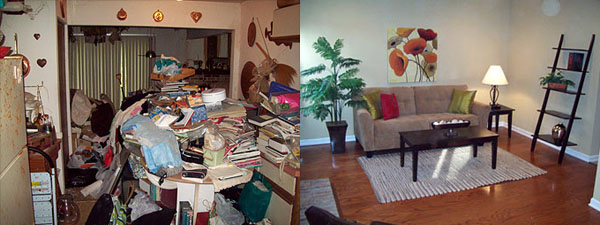
 

After filling 3 huge dumpsters this Chicago home cleaned up nicely.
Photo: HomeVestors


The Chicago area is a moderately-priced market but when a two-bedroom, two-bath townhouse is in as bad condition as this one was, the value can plummet.

Despite the separate dining room, the balcony off the master bedroom and the nice yard, this home sold for a mere $45,000.

Why so cheap? The interior was a disaster. Junk was piled shoulder high in some spaces. It took three, 40-foot-long dumpsters to get rid of it — and that did not include construction debris, reports the buyer, Alan Washer, a HomeVestors franchisee.

Washer completely rehabbed the house and replaced the wiring and heating systems. He put in all new interior doors and hardware, hardwood floors, bath tile and fixtures, windows and molding. All told, it took six months to complete the job.

Even after deducting for expenses, the deal was profitable: Washer sold the home for $162,000.


Frisco, TX
Status: Refreshed
Ugly price: Not applicable
Restored price: Not applicable
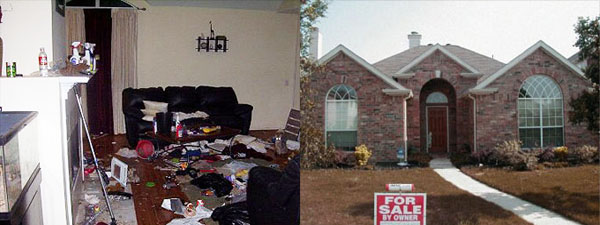
 

The renter in this Frisco, TX home left behind a huge mess but the outside looks good.
Photo: HomeVestors


The owner of this vintage house north of Dallas, Robert Pittana, nominated it for the Ugly Home contest himself because, he said, “I had never seen a house that ugly before.”

Really though, the place has all the attractive exterior accouterments of a home buyer’s dream: an arched entryway and windows, solid brickwork and a fan-light over the front door. Inside, though, it was another matter.

Pittana had rented the house to someone who “went off the deep end,” he said. Neighbors informed Pittana that they saw five or six cats trying to get out of the house. When he entered, he couldn’t stay long: There were cat feces everywhere, even on the ceiling.

The fix included stripping out the carpets and floors, bleaching walls and repainting. He brought in an ozone machine for several days to drive out the stink. Pittana still owns his ugly home, but it’s a lot easier on the eyes and nose now.


Englewood, CO
Status: Renovated
Ugly price: $76,000
Restored price: $110,000


This Englewood, CO abode just needed a good clean-up.
Photo: HomeVestors


The ugly duckling on a block of well-kept homes, this was a sad little two-bed, two-bath ranch house that sold for less than half as much as other similar homes in the neighborhood.

The home’s biggest problem was its owner, a hoarder. Floors, cabinet tops and other surfaces were piled with junk, much of it soiled and worthless.

Once the buyers got rid of the junk, exterminated all the pests and eradicated the molds, the home only needed some cosmetic repairs and replacements, which were done in just a few weeks.

The house was resold for $110,000, up from the $76,000 paid for it in this condition and retook its rightful place among the other tidy homes in the community.


Teaneck, N.J.
Status: Renovated
Ugly price: $180,000
Restored price: $330,000
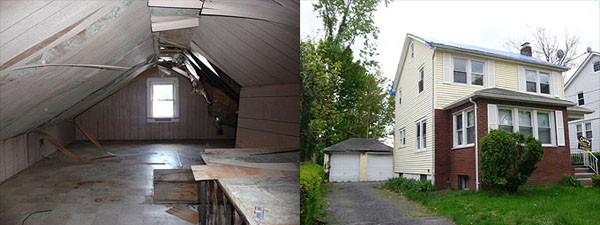
 

Roof leaks took a heavy toll on this Teaneck, N.J. home – but now it’s better.
Photo: HomeVestors


From the street, this bank-owned property looked pretty good: a modest wood-framed colonial with a small yard and a two-car garage. Inside was another story.

The roof had leaked for years and rainwater had rotted out many of the home’s structural elements — all the way to the basement. The plaster ceilings and walls were un-salvageable and ugly thick mold was growing all over the damp spots in the house.

The buyers had to completely restore the home with new floors, sheet rock, paint and woodwork. The baths were done with tile and the kitchen with granite counters, cherry wood cabinets and stainless steel appliances.

Teaneck, N.J., where this home is located, is a short hop to Manhattan and home prices are relatively high, averaging about $350,000, according to real estate website Zillow. The buyers only paid $180,000 for this home. After they renovated the place, they sold it for about $330,000.


Shirley, MA
Status: Renovated
Ugly price: $41,915
Restored price: $174,500
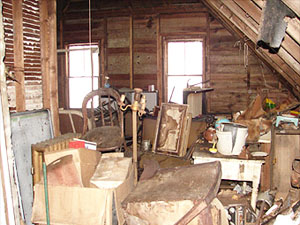
 

An ugly duckling home can become a swan.
Photo: HomeVestors


This was a handsome old house, one of the nicest in town, with a rocking-chair front porch and roomy interiors. But then the former owner lost his job, according to the local HomeVestor franchisee, Michael Jordan, and “The mounting bills and upkeep on the home became too much.”

Jordan and his brother, a contractor, bought the home for less than $50,000 and embarked on a total renovation. One of the biggest problems was the amount of debris. Jordan filled dumpsters with junk, including two pianos and several arcade games.

The home needed a lot: a new roof, heating system and the floors were a wreck. All the windows had to go. The Jordans also added a bathroom and put in a new kitchen. The rehab cost about $90,000.

They resold it at a small profit. But almost as important, said Jordan, is getting rid of an eyesore for the neighborhood.

Originally posted on money.cnn.com

5 Real Estate Headlines You’ll see in the Next Six Months

This is great insight from our friends at KCMBlog.com:


Making predictions can be the ‘kiss-of-death’ for a blog. Even if we get four out of five correct (80%), there are those in the industry who will kill us on the one we got wrong. We believe strongly that when making a real estate decision for you and your family you must look forward and take into consideration how the housing market may change.

For this reason, we are willing to take on the possible wrath of our counterparts by sticking out our necks and predicting these will be the major real estate news stories from now until the end of the year.

Interest Rates Rise

Many, including us, have been surprised that rates have not risen already. However, the next several months are going to see three distinct changes that will propel rates upward.

  1. As the government starts to leave the mortgage market, private industry will step in. Private industry demands a higher rate of return on their investments. Mortgages will be no different. Studies have shown that 30 year mortgage rates could increase by 1 to 3% over the current rate.
  2. In many higher priced markets, rolling back Conforming Loan Limits means that rates for the mortgages on these properties will resort back to the rates on private jumbo loans. The FHFA informed us that last year, the difference between mortgage rates for jumbo loans and jumbo-conforming mortgages has varied between about ½ and ¾ of a percentage point.
  3. As the economy gets better (and we believe it will), the pressure to keep rates low to stimulate growth will abate.

Some Loan Requirements Tighten but More Can Now Get a Loan

Lending institutions have already started to introduce stricter mortgage guidelines. Whether the Quality Residential Mortgage (QRM) requirements are instituted as originally proposed or eased somewhat, there is no doubt that guidelines will continue to tighten as we work through the year. However, we believe the private sector will again start introducing alternative mortgage financing but at a greater expense to the consumer. You WILL be able to get a mortgage. It will just cost you more.

Housing Sales Increase

Contracted sales have shown consistent improvement over the last six months and we feel this will continue and actually begin gaining even greater momentum. We believe there is a ‘pent-up’ buying demand caused by the volatility of the market over the last several years. When interest rates start to move upward and alternative financing becomes more available, these buyers will start to jump off the fence. We believe there will be a major upswing in sales over the next six months.

Distressed Properties Increase Markedly

More people are paying their mortgage on time and that is great news for housing in the long term. However, the numbers of distressed properties currently in the foreclosure process is still very swollen. These properties will begin coming to the market in the second half of the year as short sales and foreclosures. The numbers will be staggering in some areas.

Prices Continue to Soften in Most Markets

The current housing inventory for sale and the distressed properties about to come on the market will vastly outnumber the increased supply of purchasers we will see over the next six months. There will be more houses for sale then there will be buyers purchasing them. That oversupply will continue to put downward pressure on prices through the rest of this year and into 2012.

You now know what we believe will take place in real estate between now and the end of the year.


5 Real Estate Headlines You’ll see in the Next Six Months

This is great insight from our friends at KCMBlog.com:


Making predictions can be the ‘kiss-of-death’ for a blog. Even if we get four out of five correct (80%), there are those in the industry who will kill us on the one we got wrong. We believe strongly that when making a real estate decision for you and your family you must look forward and take into consideration how the housing market may change.

For this reason, we are willing to take on the possible wrath of our counterparts by sticking out our necks and predicting these will be the major real estate news stories from now until the end of the year.

Interest Rates Rise

Many, including us, have been surprised that rates have not risen already. However, the next several months are going to see three distinct changes that will propel rates upward.

  1. As the government starts to leave the mortgage market, private industry will step in. Private industry demands a higher rate of return on their investments. Mortgages will be no different. Studies have shown that 30 year mortgage rates could increase by 1 to 3% over the current rate.
  2. In many higher priced markets, rolling back Conforming Loan Limits means that rates for the mortgages on these properties will resort back to the rates on private jumbo loans. The FHFA informed us that last year, the difference between mortgage rates for jumbo loans and jumbo-conforming mortgages has varied between about ½ and ¾ of a percentage point.
  3. As the economy gets better (and we believe it will), the pressure to keep rates low to stimulate growth will abate.

Some Loan Requirements Tighten but More Can Now Get a Loan

Lending institutions have already started to introduce stricter mortgage guidelines. Whether the Quality Residential Mortgage (QRM) requirements are instituted as originally proposed or eased somewhat, there is no doubt that guidelines will continue to tighten as we work through the year. However, we believe the private sector will again start introducing alternative mortgage financing but at a greater expense to the consumer. You WILL be able to get a mortgage. It will just cost you more.

Housing Sales Increase

Contracted sales have shown consistent improvement over the last six months and we feel this will continue and actually begin gaining even greater momentum. We believe there is a ‘pent-up’ buying demand caused by the volatility of the market over the last several years. When interest rates start to move upward and alternative financing becomes more available, these buyers will start to jump off the fence. We believe there will be a major upswing in sales over the next six months.

Distressed Properties Increase Markedly

More people are paying their mortgage on time and that is great news for housing in the long term. However, the numbers of distressed properties currently in the foreclosure process is still very swollen. These properties will begin coming to the market in the second half of the year as short sales and foreclosures. The numbers will be staggering in some areas.

Prices Continue to Soften in Most Markets

The current housing inventory for sale and the distressed properties about to come on the market will vastly outnumber the increased supply of purchasers we will see over the next six months. There will be more houses for sale then there will be buyers purchasing them. That oversupply will continue to put downward pressure on prices through the rest of this year and into 2012.

You now know what we believe will take place in real estate between now and the end of the year.


Pending Home Sales Rebound, Mortgage Rates Remain Low

Pending home sales rose sharply in May with all regions experiencing gains from a year ago, a signal that the housing market could improve through the second half of the year, the National Association of Realtors said Wednesday.

Pending sales, a forward-looking indicator based on contract signings, jumped 8.2 percent to 88.8 in May from an upwardly revised 82.1 in April, according to NAR. That is 13.4 percent higher than the 78.3 reading in May 2010.

“Absorption of inventory is the key to price improvement, and this solid gain in contract signings implies that home values in many localities are or will soon be stabilizing as inventories get absorbed at a faster pace,” said Lawrence Yun, NAR chief economist.

“Some markets have made a rapid turnaround, going from soft activity to contract signings rising by more than 30 percent from a year ago,” he said.

Those markets include Hartford, Conn.; Indianapolis; Minneapolis; Houston and Seattle.

Pending sales in the Northeast were up 7.3 percent, 4.4 percent above a year ago. The Midwest the index jumped 10.5 percent, 17.2 percent higher than May of last year.

In the South, pending home sales increased 4.1 percent, 14.6 percent higher than a year ago. In the West the index surged 12.9 percent, 13.5 percent above May 2010.

The data reflects contracts but not closings, which normally occur with a time lag of one to two months.

This is the first time since April 2010 that contract activity was above prior year levels, and the monthly gain was the strongest increase since last November, when the index rose 10.6 percent.

“Home sales still could be 15 to 20 percent higher,” Yun said. “If banks would simply return to normal sound underwriting standards and begin lending to more creditworthy borrowers, we’d get a much faster recovery in the housing sector.”

Mortgage rates are in line to spur buying.

The average contract interest rate for 30-year fixed-rate mortgages decreased to 4.46 percent from 4.57 percent,  the lowest 30-year rate recorded in the survey since the middle of November, the Mortgage Bankers Association said in its weekly Wednesday report.

A 15-year fixed-rate mortgage decreased to 3.64 percent from 3.70 percent, the lowest 15-year rate recorded in the survey since the beginning of November.

Meanwhile, mortgage applications decreased 2.7 percent from a week earlier, even as home loan rates dropped to their lowest levels in nearly eight months.

The Refinance Index decreased 2.6 percent while the seasonally adjusted Purchase Index decreased 3.0 percent in the week that ended June 24, according to data from the Mortgage Bankers Association.

Overall, the four-week moving average is up 0.7 percent, with refinancings showing a 1.5 percent increase, while purchases are down 1.5 percent.

The refinance share of mortgage activity increased to 69.5 percent of total applications from 69.2 percent the previous week.

Originally posted on thehill.com

Home Prices Up, First Time in 8 Months

Data through April 2011, released yesterday by S&P/Case-Shiller Home Price Indices, the leading measure of U.S. home prices, show a monthly increase in prices for the 10- and 20-City Composites for the first time in eight months. The 10- and 20-City Composites were up 0.8% and 0.7%, respectively, in April versus March.

In April 2011, the 10-City and 20-City Composites recorded annual returns of -3.1% and -4.0%, respectively. On a month-over-month basis, the 10- and 20-City Composites were up 0.8% and 0.7% in April versus March.

“In a welcome shift from recent months, this month is better than last – April’s numbers beat March,” saysDavid M. Blitzer, Chairman of the Index Committee at S&P Indices. “However, the seasonally adjusted numbers show that much of the improvement reflects the beginning of the Spring-Summer home buying season. It is much too early to tell if this is a turning point or simply due to some warmer weather.

As of April 2011, average home prices across the United States are back to the levels where they were in the summer of 2003. Measured from their peaks in June/July 2006 through April 2011, the peak-to-current declines for the 10-City Composite and 20-City Composite are -32.6% and -32.8%, respectively. From their April 2009 troughs, the 10-City Composite has risen 1.4% and the 20-City Composite is up a scant 0.7%.

The table below summarizes the results for April 2011. The S&P/Case-Shiller Home Price Indices are revised for the 24 prior months, based on the receipt of additional source data. More than 24 years of history for these data series is available, and can be accessed in full by going to www.homeprice.standardandpoors.com


April 2011 April/March March/ February
Metropolitan Area Level Change (%) Change (%) 1-Year Change (%)
Atlanta 101.95 1.6% -0.3% -3.5%
Boston 147.07 -0.2% -1.7% -4.2%
Charlotte 108.42 -0.3% -1.2% -6.6%
Chicago 110.12 -0.4% -2.4% -8.6%
Cleveland 97.69 1.2% -1.8% -6.8%
Dallas 113.38 0.5% -0.8% -4.0%
Denver 122.32 1.5% -0.6% -4.1%
Detroit 62.74 -2.9% -4.4% -7.5%
Las Vegas 96.47 -0.7% -1.1% -6.2%
Los Angeles 168.20 0.3% -0.3% -2.1%
Miami 136.99 -0.2% -0.8% -5.6%
Minneapolis 106.07 0.4% -3.7% -11.1%
New York 164.17 0.8% -1.0% -2.8%
Phoenix 100.36 0.1% -0.5% -8.8%
Portland 132.84 0.1% -0.7% -9.2%
San Diego 154.50 0.4% -0.8% -4.3%
San Francisco 132.03 1.7% -0.1% -5.5%
Seattle 135.14 1.6% 0.1% -6.9%
Tampa 126.47 -0.4% -0.5% -7.7%
Washington 186.76 3.0% 0.2% 4.0%
Composite-10 152.51 0.8% -0.8% -3.1%
Composite-20 138.84 0.7% -0.9% -4.0%
Source: Standard & Poor’s and Fiserv
Data through April 2011


Read the full report at HousingViews.com.


Are the Wealthy Buying Real Estate?

We have taken the stance that real estate is currently a great investment. There have been MANY that have let us know that they think we are crazy. Today, let’s look at a few prominent people, media sources and one very important group that agree that now is the time to buy.

Fortune Magazine and The Wall Street Journal

John Paulson, billionaire investor.

Donald Trump, no introduction necessary.

Barbara Corcoran, real estate TV personality.

A pretty impressive list!

So are the wealthy buying real estate?

The real question: Is anyone listening to them? The answer: The wealthiest people in the country. According to the most recent Existing Sales Report from the National Association of Realtors, at a time when sales of all homes have decreased 2.8% compared to last year, homes over $1million dollars are selling at a rate 3.9% higher.

Why are the wealthy buying real estate right now?

  • Money is cheap. The 5% interest rate will not be available forever.
  • The ability to lock in that interest rate for 30 years may soon disappear.
  • Getting a mortgage may get much more expensive soon.
  • They want to buy low and sell high. The price of real estate is low.

Bottom Line

We know many will disagree with us about now being the time to buy. But if the wealthiest people in the country are buying real estate, shouldn’t we at least consider the possibility?