
You are here: Benchmark Home » Credit Tips

Category: Credit Tips

Is a HELOC a good financial choice?

 A Home Equity Line of Credit (HELOC) is an easy way to borrow money using your home’s value as collateral. Let’s look into how a HELOC works and whether this option is right for you.

  • A home equity line of credit (HELOC) works much like a credit card. With money drawn from a HELOC, you can pay for things like home remodeling/repair fees, credit card debts, or even save it for rainy day funds.
  • A HELOC’s interest rates can be significantly lower than a credit cards

How Much Can You Borrow with a HELOC?

The first step in deciding if a HELOC is right for you is knowing whether you have enough home equity to qualify. This will also determine the amount of the credit line that you’re eligible for. 

Your home equity is the difference between your home’s appraised value and your mortgage balance (assuming you have an existing mortgage). 

Example: HELOC for a home worth $500,000

if your home is worth $500,000 and you have 50% equity, you may be able to borrow as much as $150,000 in a Home Equity Line of Credit (HELOC).

Let’s break that down.

  1. If your home is worth $500,000 and you owe $250,000, your equity is 50%.

    $500,000 – $250,000 = $250,000

    • If your home is worth $500,000 and you don’t have a mortgage, your equity is 100% ($500,000 – 0 = $500,000).

  2. To estimate your possible HELOC credit limit, calculate your combined loan-to-value ratio (CLTV ratio, or your line of credit relative to your home equity). Most HELOC lenders allow a CLTV of at least 80% on your main home, sometimes higher.

    To estimate, multiply your home’s appraisal value by 0.8. This is approximately how much money lenders may let you borrow against your home. With a home value of $500,000, it comes to $400,000.

    $500,000 x 0.80 = $400,000

  3. Then, subtract the amount you still owe on your existing home loan. For our example, let’s estimate that to be $250,000.

    $400,000 – $250,000 = $150,000 credit limit for our example HELOC.

So, How Does a HELOC Work?

A HELOC is a revolving line of credit with a variable interest rate, like a credit card. It also has a fixed term and a defined repayment period, like a mortgage.

A credit card’s credit limit is based on your household income and credit score. You can spend as much, up to the credit limit, or as little as you want in each billing cycle. When you get your statement, you have to make at least the minimum monthly payment, but you can choose to repay the entire statement balance if you don’t want to accrue interest. When your payment is processed, your available credit increases by the amount of your payment that went toward the balance. If a portion of your payment is going to interest, this portion will not contribute to your available credit.

A HELOC is similar, but your credit limit is also based on how much equity you have in your home. Additionally, a HELOC has two periods:

  1. First, there is a draw period, typically several years, during which you can borrow up to your credit limit and make interest-only payments.

  2. Then, there is a repayment period, generally several more years, when you can no longer borrow money but must repay your outstanding balance with interest.

What are the steps to get a HELOC?

  1. Apply with a Benchmark online, in person, or over the phone.

  2. You will be asked to submit supporting documents including photo ID, paystubs, tax returns, proof of assets, bank statements, current mortgage details, and other financial information

  3. If approved, Benchmark will issue an initial, conditional approval

  4. Benchmark will order and schedule an appraisal of your home.

  5. Our underwriters will check your application and make sure everything’s in order

  6. Your final approval will be sent by your underwriter

  7. Close the loan and receive funding. Since a HELOC is not a lump sum loan, you’ll receive a special account or card allowing you to access your HELOC as needed

What else should you know to decide if a HELOC might be a good choice for you?

We recognize that not every loan product is right for everyone. There are a few more things you should know about HELOCs.

  • Like most credit, the better your credit score and credit history, the higher the chances are that you will be approved. 

  • A HELOC is a very low cost way to borrow money, and can be an attractive option if you do not have a substantial amount in savings, and are in need due to a crisis or economic downturn. 

  • You can use a HELOC to pay for almost anything, and funds are easily accessible once open. 

  • If you feel burdened with credit card debt, and you’re looking for a way to save on interest, a HELOC could be a great tool. 

Curious to learn more?

At Benchmark, we are committed to listening to your goals and setting you up for future success. To learn more, Contact your local Benchmark branch. Contact us today for personalized information. Call me yourself or request a call from me. WeI would be honored to provide you with our famous excellent service.


Benchmark brings you home.

benchmark circle icon

the sun rising in the distance

Can I Still Get A VA Loan With Bad Credit?

the sun rising in the distance

Unfortunately, it depends on the situation and reasons, so there is no simple answer for bad credit. A few potential reasons could be that you have experienced a divorce which led to a bankruptcy, mismanaged your finances, experienced job loss, or any other financial hazards.

Your credit is calculated from many moving parts. The good news is that your credit score is constantly changing! If you take steps to improve your financial habits, you may also gain an improved credit score in addition to greater peace of mind.

At Benchmark, we don’t leave you to figure it out all on your own.

You are working hard for the chance to buy your dream home. Shouldn’t your lender ,at least, work just as hard?

Knowing what improvements to make when improving your credit can be tricky. That’s where we can help. For example, while some factors apply to everyone, there will be others that only apply to you.

Some strategies you could use to positively impact your score very quickly are:

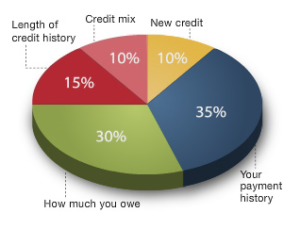
  1. Keep credit card balances low: I like to call this the rule of 30. Your balance accounts for 30% of your credit score. You want to make sure that your utilization ratio is less than 30%. For example, if you have a credit limit of $1,000, your balance should NEVER exceed $300. If you are already over that, pay it down to where it is less than 30%. By far, this is the mistake that most people make.
  2. Pay your debts: This is not always as simple as it seems, but this accounts for 35% of your score. Something to keep in mind is that paying off new debt has a greater impact than paying off old debt. If you have a newer open credit card, pay that balance first.
  3. Clear up any mistakes: Did you know that as many as 4 out of 5 people have errors on their credit reports*? The odds that you may be one of them are high at 80%. While you can pull your own credit for free once a year, credit reports can be difficult to read. At Benchmark, we review your credit report with you to ensure your credit’s accuracy. If errors are found on your report, you have the opportunity to correct them.
    *https://www.cbsnews.com/news/4-in-5-credit-reports-have-errors/

Ratio of used credit and payment of debt combine to account for 65% of your score. The next biggest factor is time, or the length of your credit history. If you are trying to improve your credit, it is important that you do not close your credit card accounts. This hits you on two categories: one is your credit utilization ratio ,or how much you owe, because the ratios will not be calculated properly on closed accounts (you’d have debt, but no extra credit limit), and the other is on length of credit history, because a closed account does not report a length of time.

Chart of credit status and new mortgages
Image source: https://www.cbsnews.com/news/4-in-5-credit-reports-have-errors/

Overall, there is no single quick technique to improve your credit score. It’s best to simply live within your means, by not spending more than your income. If you’d like more information, give us a call. We can help you get a more personalized view of your credit, and help you decide what you can do to improve it.

At Benchmark, we are ready to help you achieve your dream of owning your own home. Call 1-800-VET-EASYus or Contact Us, or get your Certificate of Eligibility to get started today!

Credit Card Myths Uncovered

Advice can be helpful in many cases, but following misguided or erroneous advice, even when well-intended, can have a devastating impact. The same is true of advice on bolstering your credit score. Unfortunately, there is a variety of mistaken credit advice floating around that can actually make yours worse. Here are some common myths that you should disregard when trying to get a better credit score.

Inquiries Hurt

Too many inquiries can cause your score to fall slightly, but the idea that score inquiries hurt is overblown. Indeed, with many scoring types, inquiries made within a certain period are actually considered to be a single one. There are good reasons for this. Say you want to buy a car. The dealer will often look to several banks for financing, and it would be wrong for you to be penalized for it. Furthermore, if you have a credit account, the company will regularly review your credit status. This method, called a “soft pull”, doesn’t affect your score. Another example of a “soft pull” is inquiring about your own credit score, so don’t be afraid to check.

Debt = Good Score

This claim is patently untrue. If you have more debt than credit, your overall credit score will take a big hit. Your repayment habits also impact this. Repaying the full balance every month doesn’t help. It’s much more important to make regular payments on time. In fact, just by being dutiful with your payment schedule, you can achieve an excellent score with minimal or no debt.

Debit Doesn’t Impact Credit

Debit card activity isn’t turned over to credit companies, but using one does have an effect. If your bank account is protected from overdrafts by a line of credit, it can have either a positive or negative impact. If you don’t make any payments on the loan, or if you max it out, your score will suffer. However, if you use this carefully, it can improve your credit standing. You should also carefully look over your account details regularly. It’s common for people to be unaware that they’ve gone above their line of credit.

Co-Signing Doesn’t Matter

When you sign onto another person’s loan and it’s significant enough to upset your income to debt balance, your credit is circling the drain. This can cause you to be denied for any future loans you may need. The lending company might accept a note claiming that you’re not paying on the loan, or they might not. Either way, you’ll still be considered responsible for whatever you sign your name on.

Credit Card Myths Uncovered

opt out of pre-approved credit card offers

Opt-Out of Receiving PreApproved Credit Card Offers

Are you tired of having your mailbox stuffed full of unsolicited mail, including preapproved credit card offers or personal loan applications?

Are you fed up with telemarketing calls just as you’re about to sit down to dinner?

There is help out there!

By visiting one website you can stop all that junk for 5 years.

Opt-Out of Receiving Credit Card Offers

Under the Fair Credit Reporting Act (FCRA), the Consumer Credit Reporting Companies (Experian, Equifax, and TransUnion) are allowed to include your name on lists used by credit card companies and insurance companies to make offers of credit or insurance that are not initiated by you – also known as “Firm Offers”. The FCRA also provides you the right to “Opt-Out”, which prevents Consumer Credit Reporting Companies from providing your credit file information for “Firm Offers”.

If you decide that you would rather not receive preapproved credit card offers and insurance quotes, you have two options to stop them:

  1. You can opt out of receiving them for five years.
  2. You can opt out of receiving them permanently.

To opt out for five years: Call toll-free 1-888-5-OPT-OUT (1-888-567-8688) or visit www.optoutprescreen.com. The phone number and website are operated by the major consumer reporting companies.

To opt out permanently: You may begin the permanent Opt-Out process online at www.optoutprescreen.com. To complete your request, you must return the signed Permanent Opt-Out Election form, which will be provided after you initiate your online request.

When you call or visit the website, you’ll be asked to provide certain personal information, including your home telephone number, name, Social Security number, and date of birth. The information you provide is confidential and will be used only to process your request to opt out.

Again, to opt-out of preapproved credit card offers visit http://OptOutPrescreen.com.